Thamel, Bhagwati Marg, Kathmandu

Mardi Himal Trek

From: $685 /Person
Annupurna Region
(0 Reviews)
Best Price

US$ 650.75

Duration

11 Days

Destination

Annupurna Region

Best Season

Feb - May & Sep - Nov-Dec

Difficulty Level

Moderate

Max Altitude

4500m

Activity

Trekking

Transportation

Flight / Tourist Bus

Itinerary

Time
N/A
Max Altitude
1300m

lAirport Pickup & Transfer When you land at Tribhuvan International Airport in Kathmandu, look for your driver holding a sign with your name or the trek company’s name. They’ll handle your bags, and it’s a quick, easy transfer through the bustling streets to your hotel in Thamel. The drive usually takes 20 to 40 minutes depending on traffic, plenty of time to get your first glimpses of Kathmandu’s colorful chaos, motorbikes weaving everywhere, street vendors, old temples tucked between shops.

  • Check-in & Settle In Your hotel is right in the heart of Thamel, the lively tourist hub full of trekking shops, cozy cafes, restaurants, and that classic backpacker vibe. Drop your bags, freshen up after the flight, and take it easy for a bit. Thamel’s perfect for grabbing a coffee, some momos, or just wandering the narrow lanes if you’re not too jet-lagged.
  • Meet Your Guide & Trek Briefing In the late afternoon or early evening, usually around 4 to 6 PM, your trekking guide will meet you at the hotel lobby or a nearby spot. This is your chance to put a face to the name, ask any last-minute questions, and go over the full Mardi Himal Trek itinerary. They’ll cover the daily walking distances, what to expect on the trail, weather, teahouses, altitude, gear checks, make sure you have your warm layers, rain jacket, etc., and any permits or paperwork already sorted. It’s relaxed and straightforward, bring any questions about the route, food, or what to pack extra. Your guide’s been on this trek plenty of times and will make sure you feel ready and comfortable.
  • Evening Free After the briefing, the rest of the evening is yours. Grab dinner at one of Thamel’s many spots, maybe try some Nepali dal bhat, wood-fired pizza, or Tibetan momos. If you need any last gear, headlamp batteries, snacks, etc., the shops are open late. It’s a fun, energetic area to soak up the pre-trek excitement.
  • Overnight Stay at your hotel in Thamel, comfortable bed, hot shower, Wi-Fi if you want to check in with home one last time. Get a solid night’s rest, tomorrow you’ll head out early for Pokhara and the start of the real adventure on the Mardi Himal trail.


Time
8-9 hours
Max Altitude
827m

The Scenic Drive from Kathmandu After an early breakfast at the hotel in Thamel, you hit the road for an 8 to 9 hour drive to Pokhara. The route follows the classic Prithvi Highway, a narrow one-lane road that winds along the Trishuli River most of the way. It’s a beautiful, serene ride through lush green forests, terraced hillsides, and small roadside villages. The river rushes far below with high currents and occasional rapids, making for constant stunning views out the window. Expect some bumpy stretches and occasional traffic, but the scenery more than makes up for it, snow-capped peaks start peeking out in the distance as you get closer to Pokhara.

  • Lunch Stop Around midday you’ll pull over at one of the popular spots along the highway, usually a simple roadside restaurant with outdoor seating overlooking the river. Grab a plate of dal bhat, momos, chow mein, or a quick sandwich, whatever sounds good. It’s a nice break to stretch your legs and enjoy the fresh air before continuing on.
  • Arrival in Pokhara By late afternoon you roll into the vibrant lake city of Pokhara. The energy here is completely different from Kathmandu, more relaxed and laid-back, with Phewa Lake sparkling in the center, paragliders floating overhead, and the Annapurna range (including Machhapuchhre, the famous Fishtail peak) dominating the skyline on clear days. Check into your hotel near Lakeside, the main tourist area full of cafes, shops, and restaurants right by the water.
  • Flight Option If you prefer to skip the long drive, a short 25 to 30 minute flight from Kathmandu to Pokhara is available most mornings. Flights are scenic with great mountain views, and if you take an early one you’ll arrive by late morning. That gives you time to settle in, maybe walk along the lake, rent a boat, or even start the first short leg of the Mardi Himal trek the same day if your energy and timing allow. Your guide can arrange everything and confirm based on flight availability.
  • Evening in Pokhara Once you’re checked in, the evening is free to relax. Stroll Lakeside, enjoy a lakeside dinner with fresh fish or Nepali thali, watch the sunset over the water if the weather cooperates, or just unwind at a cafe with a cold drink. It’s the perfect low-key night before the trekking begins tomorrow.
  • Overnight Stay at your hotel in Pokhara, comfortable rooms with lake or mountain views depending on your spot, hot shower to wash off the travel dust, and a good rest. Tomorrow you head into the hills for the real start of the Mardi Himal adventure.


Time
30m- drive, 5-6hrs trek
Max Altitude
2100m

Early Morning Start in Pokhara Wake up early, grab a quick breakfast at the hotel, maybe some toast, eggs, or a bowl of porridge to fuel up for the day ahead. Nothing heavy, just enough to get you going. Your guide will meet you at the lobby, check that everyone has water, snacks, and rain gear ready, then hop into the private vehicle for the short ride.

  • Drive to Phedi It’s only about a 30-minute drive from Lakeside Pokhara to Phedi, the official starting point for the Mardi Himal trek. The road winds up through green hills and small villages, giving you your first real taste of the Annapurna views as you leave the city behind. Once you reach Phedi, the vehicle drops you off at the trailhead, usually near a small parking area with a few tea shops. This is where the real adventure kicks off.
  • Beginning the Trek Tighten those shoelaces, adjust your pack, and start walking. The first section is mostly uphill right from the get-go, a steady, sometimes steep climb through forests, terraced fields, and rural paths. It can feel demanding at the beginning, especially if you’re still shaking off the travel legs, but the pace is yours to set. Take short breaks when needed, sip water often, and enjoy the changing scenery, rhododendron trees, birds calling, and glimpses of the surrounding ridges. Your guide will point out interesting spots and keep an eye on how everyone’s doing.
  • On to Deurali After a few hours of solid uphill effort, the trail levels out a bit as you approach Deurali. This is a small settlement perched at around 2,100 meters, with a handful of basic guest houses scattered along the ridge. The views start opening up here, with the first clear looks toward the Mardi Himal range and Annapurna South on good days. It’s a rewarding spot to arrive after that initial push, and the air feels fresher and cooler.
  • Afternoon & Evening at Deurali Check into your guest house, drop your bags, and settle in. Rooms are simple, twin beds with shared bathrooms, but the family-run places are usually warm and welcoming. Use the rest of the afternoon to relax on the terrace, enjoy a hot cup of lemon ginger tea, or take a short wander around the area. Dinner will be hearty Nepali food, probably dal bhat with veggies and maybe some local pickles, eaten together in the common dining room. It’s a great chance to chat with your group, share stories from the day, and recharge for tomorrow’s trek higher up.
  • Overnight Stay at a guest house in Deurali, basic but cozy, thick blankets for the cooler mountain night, and the sound of the wind through the trees. Early to bed recommended, tomorrow the trail gets even more scenic as you climb toward the high camp areas.


Time
6-7 hours
Max Altitude
2520m

Day 4 – Trek from Deurali to Forest Camp

  • Quick Breakfast in Deurali Start the day with a simple, quick breakfast at the guest house, probably some toast with jam, boiled eggs, porridge, or chapati with honey to keep things light and energizing. Fuel up well since today’s trek is longer and more immersive in the forest.
  • Into the Enchanting Forest Hit the trail right after eating, heading uphill through one of the most beautiful sections of the Mardi Himal trek. The path winds steadily through dense, enchanting forests of tall oak, maple, and rhododendron trees. In spring the rhododendrons burst into pink and red blooms, turning the whole area into a magical tunnel of color, while in other seasons the thick green canopy and twisted branches create a cool, shaded atmosphere. The trail is mostly gentle to moderate uphill with some flatter stretches, roots and rocks underfoot, birds singing overhead, and the occasional glimpse of sunlight filtering through the leaves. It’s peaceful and immersive, the kind of walking that makes you forget about time and just enjoy being in nature.
  • Arrival at Forest Camp After a few solid hours of walking, usually 4 to 6 depending on your pace and photo stops, you reach a lovely clearing in the forest known as Forest Camp (also called Kokar or Low Camp) at around 2,500 to 2,600 meters. It’s exactly as the name suggests, a flat open spot surrounded by trees with a handful of simple accommodations tucked in. The views start to improve here, with partial peeks at the Mardi Himal ridge and surrounding hills through the branches. It feels remote yet welcoming, a real step deeper into the mountains.
  • Real Local Experience at Homestay-Style Accommodations Tonight’s stay is more like a homestay than a standard lodge. The places here are family-run, small-scale setups with basic but warm rooms, often in the owners’ own homes or attached buildings. You’ll get that genuine local hospitality, maybe chatting with the family over tea, watching them prepare meals, or hearing stories about life in these hills. Dinner is usually home-cooked Nepali style, fresh dal bhat with local veggies, maybe some buffalo curry or greens picked nearby, eaten together in a cozy dining area. It’s a great way to connect with the people who call this region home and get a real feel for mountain life.
  • Evening at Forest Camp After settling in, use the late afternoon to relax on the clearing, stretch your legs with a short wander around the area, or just sit with a hot drink and take in the forest sounds as the light fades. The air is crisp and clean up here, and the quiet is perfect for unwinding after the day’s walk. Early dinner and an early night are the norm, everyone recharges for tomorrow’s climb toward higher camps with even better mountain views.
  • Overnight Stay at a homestay-style accommodation in Forest Camp, simple twin rooms with shared bathrooms, thick blankets for the cooler night, and that warm family-run vibe. It’s cozy and authentic, the perfect spot to rest up before heading higher tomorrow.
Time
5-6 hours
Max Altitude
2970m

Early Morning Start We get going nice and early after a simple breakfast at the homestay in Forest Camp, just some tea, toast, eggs, or whatever’s quick to keep us moving. The air’s fresh and crisp up here, perfect way to kick off the day.

  • Through the Rhododendron Forest The trail heads straight into more beautiful forest walking, this time with even thicker rhododendron trees. If it’s spring or early summer you’ll be surrounded by blooming pink and red flowers everywhere, the whole path feels like it’s glowing. Mixed in are moss-covered rocks and trunks, tree ferns unfurling like giant green umbrellas, and that soft, damp forest smell that makes everything feel alive. The path climbs steadily but not too harshly, with plenty of shade and roots to step over, so it’s steady effort rather than a killer grind.
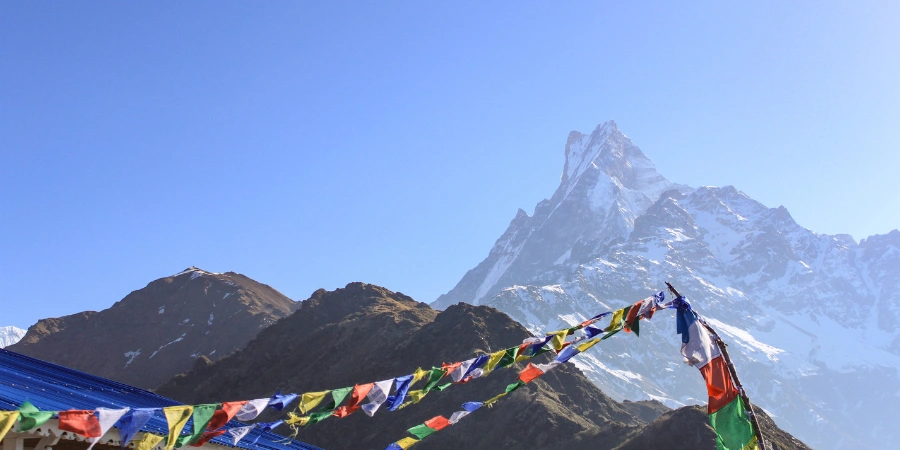
  • Arrival at Low Camp After about 5 hours of walking you pop out at Low Camp, usually around 3,000 to 3,050 meters. It’s a wide open clearing with a few teahouses set on a ridge, and the moment you arrive the trees part and bam—there’s Machhapuchhre (Fishtail Mountain) right in front of you. The views are absolutely stunning, that classic sharp peak rising straight up, often with snow on top and clouds drifting around it. On a clear day it feels so close you could almost touch it, one of those wow moments that makes the whole morning’s effort worth it instantly.
  • Afternoon at Low Camp Settle into the teahouse, drop your pack, and just take it all in. Grab a seat outside with a hot drink, watch the mountain light change as the afternoon goes on, maybe chat with other trekkers or the family running the place. It’s a relaxed spot up here, no rush, just good vibes and killer scenery. Dinner will be the usual hearty stuff, dal bhat with some fresh greens or whatever they’ve got cooking, eaten together in the warm dining room.
  • Overnight Stay at the teahouse in Low Camp, basic twin rooms with shared bathrooms, plenty of blankets since it cools off quick once the sun drops. Get a good rest tonight, tomorrow we push higher toward High Camp and even closer mountain views.


Time
3-4 hours
Max Altitude
3540m

 Early Start from Low Camp We kick off the day early with a quick breakfast at the teahouse, probably some hot tea, porridge, or chapati with jam to warm us up and get the energy going. The morning light hits the mountains early up here, so it’s worth getting on the trail soon to catch the best views as the sun rises.

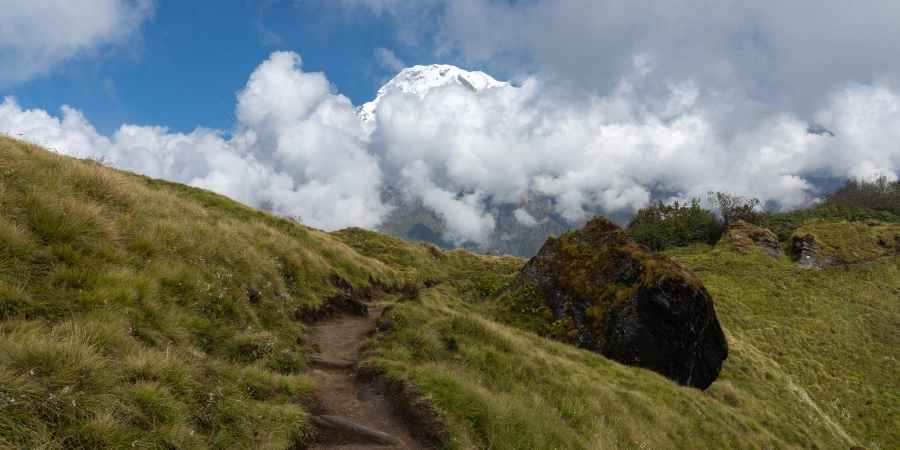
  • Along the Mardi Himal Ridge Today’s trek follows the ridgeline of Mardi Himal itself, and the path feels more open and airy compared to the forest sections below. You’ll still pass scattered rhododendron trees clinging to the slopes, their twisted branches and leftover blooms (especially nice in season) adding pops of color against the rocky terrain. Keep your eyes peeled for Danphe birds, Nepal’s national bird, the Himalayan monal. They’re colorful, with iridescent feathers that flash in the sunlight, and you might spot them scratching around or flying short bursts between bushes. It’s always a treat when one pops up, makes the walk feel even more special.
  • The Climb to High Camp The trail is mostly steady uphill with some flatter stretches along the ridge, nothing too brutal but enough to keep you breathing harder as you gain height. The views keep improving with every step, the landscape opening up to wide panoramas of rolling green ridges dropping away on both sides. After about 4 to 5 hours, depending on your pace and how many photo stops you take, you reach High Camp at around 3,580 to 3,800 meters. It’s a small cluster of teahouses perched right on the ridge, exposed and windy but in the absolute best spot for what comes next.
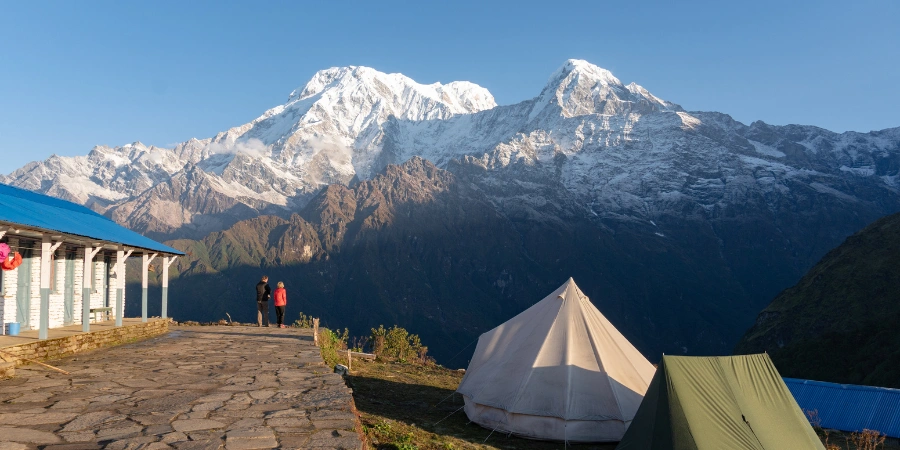
  • Face to Face with the Giants As soon as you arrive and drop your pack, turn around and there they are: Annapurna South, Machhapuchhre (Fishtail), and Hiunchuli standing massive and close right in front of you. The peaks feel almost within reach, their snowy faces glowing in the afternoon light, often with wisps of cloud drifting across. It’s one of those postcard-perfect moments on the Mardi trek, the kind where everyone just stops talking for a minute and stares. Grab a spot on the terrace or a rock outside, have a hot drink, and soak it all in, the views don’t get much better than this.
  • Afternoon at High Camp Settle into the teahouse, the rooms are basic but the location makes up for everything. Use the rest of the day to relax, maybe take a short wander along the ridge for different angles on the mountains, or just sit and watch the light shift across the peaks. Dinner will be the usual solid Nepali spread, dal bhat with extra garlic soup if you want to stay warm, eaten in the cozy common area with other trekkers swapping stories about the day.
  • Overnight Stay at the teahouse in High Camp, twin beds with plenty of blankets since it gets cold fast once the sun goes down, shared bathrooms, and that unbeatable mountain backdrop right outside your window. Early night tonight, tomorrow we head even higher to Upper Viewpoint or start the descent, depending on your plan.


Time
7-8 hours
Max Altitude
4590m
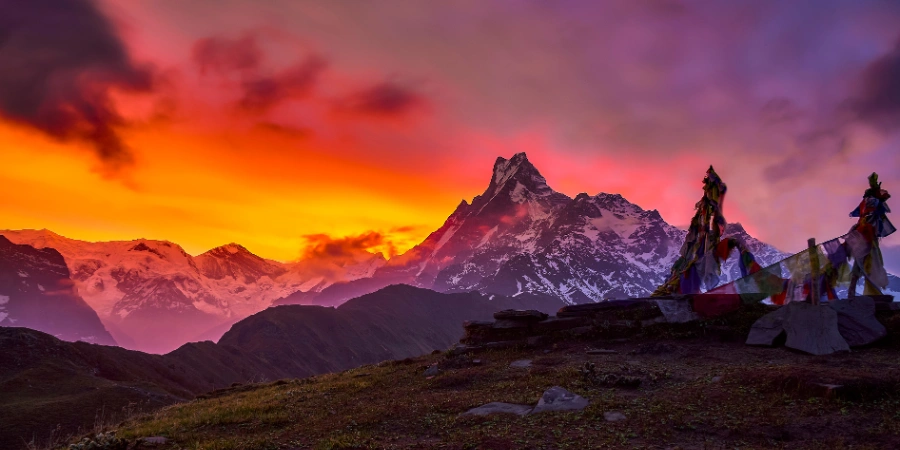
  • Sunrise Magic Set your alarm early, really early, because catching the sunrise here is non-negotiable. Crawl out of your warm sleeping bag before first light, grab a hot cup of tea from the teahouse kitchen if they’re up, and step outside. The sky starts turning pink and orange behind the peaks, then the sun peeks over the horizon and slowly lights up Annapurna South, Machhapuchhre, and Hiunchuli one by one. The snow on the summits turns golden, shadows shift across the ridges, and for a few minutes the whole scene feels alive and glowing. It’s one of those quiet, perfect moments on the trek, cool wind on your face, maybe a few other trekkers standing in silence with you, just watching.
  • Chilling with the Views Once the sun’s fully up, the day is yours to do whatever feels right. No big trek agenda today, just soak in being right in the middle of it all. The high camp sits perfectly on the ridge, so you’ve got 360-degree views without moving much. Wander short distances along the ridge for different angles, find a sunny rock to sit on, read a book, journal about the trip so far, or just lie back and stare at the mountains. The cool winds keep blowing across, fresh and crisp, carrying that high-altitude smell of pine and snow. It’s the kind of lazy, rewarding day that makes the effort of getting here worth every step.
  • Midday & Afternoon Vibes Lunch will be simple but satisfying, probably dal bhat or noodle soup from the teahouse, eaten outside if the sun’s warm enough. Use the afternoon to explore a bit more if you feel like it, maybe hike a short extra loop along the ridge for even closer looks at Mardi Himal itself, or just hang out with your group swapping stories and photos. The light keeps changing all day, so the mountains look different every hour, soft blues in the shade, bright whites where the sun hits. It’s peaceful up here, no rush, no schedule, just you and the Himalaya.
  • Evening Wind-Down As the afternoon fades, the wind picks up a little and the temperature drops fast. Head back inside for a hot drink, maybe play cards or chat in the common room with other trekkers. Dinner’s the usual hearty spread, extra portions because everyone’s earned it, and the conversation flows easy after a day like this. Watch the last light fade off the peaks from the terrace if you’re not too cold, then call it a night knowing you’ve had one of the best days on the mountain.
  • Overnight Stay another night at the teahouse in High Camp, same cozy setup with thick blankets and that unbeatable view right outside. Sleep well tonight, the altitude’s settled in now, and tomorrow we start heading down or push to the viewpoint depending on your plan.


Time
6-7 hours
Max Altitude
1700m
  • Morning Departure from High Camp We start the day early after a last sunrise breakfast at High Camp, maybe some hot tea and whatever quick bites the teahouse has ready. Pack up, say goodbye to those incredible mountain views one more time, and hit the trail. Today we take a different path down from the usual route, heading toward Siding village instead of dropping straight to Australian Camp or lower spots. It’s a quieter, less-trodden way that feels more personal and off the main track.
  • The Descent to Siding The trail heads downhill through open ridges at first, with those big peaks still looming behind us as we lose height. The path winds through patches of rhododendron and pine, then opens into greener hillsides with terraced fields starting to appear. It’s mostly steady descending, some rocky steps and dirt paths, nothing too technical but enough to feel the change in air and temperature as we drop lower. The views shift from high alpine to lush valleys, with glimpses of villages and farmland ahead. After about 4 to 6 hours, depending on how many breaks we take to enjoy the scenery or chat, we reach Siding village.
  • Arriving in Siding Siding is a small, traditional Gurung village tucked into the hillside, not overrun by trekkers, so it keeps that authentic feel. Stone houses with slate roofs, narrow lanes, chickens wandering around, kids playing, and locals going about their day. The welcoming vibe hits you right away, people smile and wave, maybe offer a quick “Namaste” as you walk in. It’s the kind of place where you instantly feel like you’re stepping into real mountain life, far from the busier trails.
  • Experiencing Local Culture We settle in with a local family who opens their home to us for the night. It’s a proper homestay setup, simple rooms in their house, shared living space, and the chance to see how life really works here. Spend the afternoon hanging out, maybe help with small chores if you want, watch women weaving or preparing food, listen to stories from the elders about the village history or farming life. The locals are incredibly warm and genuine, happy to share their world with you, answer questions, and make you feel at home. It’s one of those experiences that sticks with you long after the trek ends.
  • Tasting Local Cuisine Dinner is the highlight, cooked right in the family kitchen. Expect fresh, home-style Gurung and Nepali dishes, things like sel roti or rice with dal, maybe some local greens stir-fried with spices, buffalo or chicken curry if they have it, and whatever veggies they’ve picked from their own fields. Everything tastes better when it’s made with love and local ingredients, eaten together around the fire or in the main room. They might even pull out some homemade raksi or chyang if you’re up for trying the local brew, a nice way to toast the day.
  • Evening in the Village After dinner, sit outside under the stars if it’s clear, listen to the village sounds winding down, maybe chat more with the family or just relax. The pace here is slow and peaceful, no rush, just good company and the feeling of being welcomed into someone’s home.
  • Overnight Stay right in the local family’s home in Siding, basic but comfortable room with blankets, shared facilities, and that warm homestay atmosphere. It’s cozy, authentic, and a perfect way to end this part of the trek before heading lower tomorrow.


Time
3-4 hrs
Max Altitude
1400m
  • Morning Departure from Siding After a cozy night in the homestay and a simple breakfast with the family, maybe some fresh chapati, eggs, or leftover dal from last night, we say our goodbyes and hit the trail one last time. The locals usually wave us off with big smiles, maybe a quick photo together, it’s always a warm send-off here.
  • The Final Trek to Lumre Today’s walk is a nice, relaxed descent, about 3 hours downhill through green hillsides, terraced fields, and small hamlets. The path is mostly easy dirt track with some stone steps, losing height steadily so your legs get a gentle workout without any big climbs. The scenery stays pretty, open views of the valleys below, occasional glimpses of the Annapurna range fading into the distance, and that fresh mountain air still hanging around. It’s a peaceful way to wrap up the trek, giving you time to reflect on the whole adventure while chatting with your group or guide.
  • Arrival at Lumre We reach Lumre, a small roadside settlement at the trail’s end, usually around midday or early afternoon. This marks the official finish of the Mardi Himal trek, right where the dirt path meets the main road. There’s often a sense of accomplishment when you spot the private vehicle waiting, sometimes with your driver waving from afar. Drop your packs, take a quick breather, maybe grab a cold drink or snack from a nearby tea shop if you want.
  • Drive Back to Pokhara Hop in the private vehicle for the roughly 2-hour drive back to Pokhara. The road winds down through more green countryside, passing villages and rivers, with the landscape getting flatter and busier as you approach the lake city. If the group prefers or timing works better, a jeep can sometimes be arranged directly from Siding to Pokhara, skipping the short trek to Lumre, but most people enjoy that final 3-hour walk to close things out properly. Either way, you’re back in Pokhara by mid to late afternoon.
  • Afternoon & Evening in Pokhara Check back into your hotel in Lakeside, take a long hot shower to wash off the trail dust, and enjoy the comforts of civilization again. The rest of the day is free, maybe stroll along Phewa Lake, rent a boat if you’re feeling relaxed, grab a proper meal at one of the lakeside restaurants, or just chill with a cold drink watching paragliders land on the shore. It’s nice to ease back into things after the mountains, with the Annapurna views still visible on clear days.
  • Overnight Stay at your hotel in Pokhara, comfortable bed, hot water on tap, maybe even a celebratory dinner with the group to toast the trek. Rest up well tonight, you’ve earned it after an amazing few days on the trail.


Time
8-9hrs Drive / 30m Flight
Max Altitude
1350m
  • Morning in Pokhara After a relaxed breakfast at the hotel in Lakeside, maybe some fresh fruit, eggs, or a last lakeside coffee while watching the boats on Phewa Lake, we check out and get ready to head back to Kathmandu. It’s bittersweet leaving Pokhara’s chill vibe, but the mountains have given us plenty of memories to carry home.
  • The 6-Hour Bus Drive Option Most groups take the comfortable tourist bus along the Prithvi Highway for the roughly 6-hour ride back to Kathmandu. The road follows the same scenic route we came on, winding along the Trishuli River with its rushing currents, green hillsides, terraced fields, and small villages flashing by. It’s a nice, relaxed way to unwind after the trek, chat about favorite moments from the trail, nap if you want, or just enjoy the views one last time. Expect some traffic near the cities, but the drive feels shorter when you’re replaying the Mardi Himal highlights in your head.
  • Mountain Flight Option If you’d rather skip the road and catch one final epic view of the Himalaya, book a short 30 to 35 minute mountain flight from Pokhara to Kathmandu. These flights usually go early morning when the skies are clearest, flying right along the Annapurna range so you get stunning close-up looks at peaks like Machhapuchhre, Annapurna South, and more. It’s a beautiful, quick way to say goodbye to the mountains from above, then land in Kathmandu feeling like you’ve had one last magical moment. Your guide or hotel can help arrange it based on availability and weather.
  • Arrival in Kathmandu Whether by bus or flight, you arrive back in the bustling capital by early to mid-afternoon. The energy of Kathmandu hits different after the quiet trails, traffic, honking, street vendors, and that familiar mix of old temples and modern life. Your private transfer takes you straight to your hotel in Thamel or wherever you’re staying, so you can drop your bags, freshen up, and ease back into city mode.
  • Afternoon & Evening Free The rest of the day is yours to do whatever feels good. Maybe wander Thamel for souvenirs, grab a proper coffee or meal at one of the cafes, visit a nearby temple like Swayambhunath if you have energy, or just relax at the hotel with a hot shower and some downtime. It’s nice to have this buffer day to decompress, reflect on the trek, and maybe meet up with the group for a farewell dinner if everyone’s up for it.
  • Overnight Stay at your hotel in Kathmandu, comfortable bed, hot water, and all the conveniences after days in the mountains. Rest well tonight, tomorrow is usually departure day or extra time in the city depending on your flight schedule.


Overview

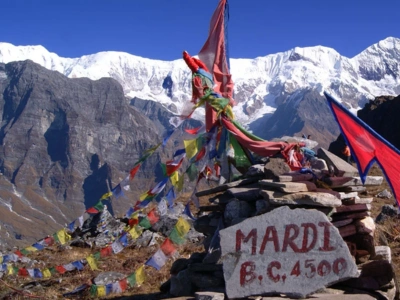
The Mardi Himal Trek ranks as one of the most rewarding short treks in Nepal's Annapurna region, sitting just north of Pokhara. It gives you genuine high Himalayan scenery in only 4 to 7 days, with a total distance of about 40 to 55 kilometers depending on your starting point and whether you loop back or take the direct descent. You start low around Kande, Dhampus, or Australian Camp at roughly 1,700 meters, then climb steadily to Mardi Himal Base Camp at 4,500 meters, sleeping in basic teahouses each night with shared rooms, hot meals, and the kind of quiet that feels rare these days.

The path takes you first through dense rhododendron forests that light up in spring with pink and red blooms everywhere, past stone-walled Gurung villages and terraced fields where farmers still work by hand. Higher up the trees give way to open grassy ridges, rocky trails, and wide alpine meadows. The real payoff comes near the top. At High Camp and especially at Mardi Base Camp, Machhapuchhre (Fishtail Mountain) stands huge and close, its twin peaks sharp and sacred, no one has ever summited it. Annapurna South, Hiunchuli, and Mardi Himal itself frame the view, often glowing at sunrise or turning pink at dusk. On clear days the whole Annapurna massif spreads out in front of you, close enough to feel personal.

What keeps drawing trekkers back is how uncrowded it remains. The route only opened to tourism relatively recently and still sees far fewer people than Poon Hill, Ghorepani, or Annapurna Base Camp. You can walk long stretches without passing another group, stop for photos or just to sit and listen to the wind without background chatter. It's moderate in difficulty, with consistent uphill sections that get steeper toward the end, but nothing technical, no ladders or scary exposure. Altitude gain is steady so most people handle it fine with a slow pace and decent fitness. Teahouses are simple but welcoming, serving dal bhat, noodle soup, and endless cups of tea, plus blankets for the chilly nights.

Compared to the bigger Annapurna treks, Mardi packs similar mountain drama into far less time and effort. You get those intimate close-up views of Fishtail and the surrounding peaks without committing to two or three weeks. It's ideal for first-timers wanting a taste of high altitude, photographers chasing sunrise shots, or anyone short on vacation days but craving real Himalayan immersion. Wildlife shows up in the lower parts, langur monkeys crashing through trees, Himalayan birds, occasional tahr on the ridges. The cultural touches are low-key but authentic, passing through villages, seeing daily life, sharing a bench with locals.

Why Choose the Mardi Himal Trek

Mardi stands out when you want big scenery without big crowds or big time investment. The views rival longer routes, especially the way Machhapuchhre dominates everything up close, yet you finish in under a week. Solitude on the trail means deeper peace, more chances to talk with teahouse owners, and a real sense of being off the main circuit. Costs stay reasonable too, with cheaper permits, shorter transport, and fewer days of food and lodging. Beginners find it approachable as a first multi-day trek, while repeat visitors appreciate the quieter alternative to the busier Annapurna paths. Add spring flowers or autumn clarity, and it's tough to find a better quick escape into Nepal's mountains.

Packing List for the Mardi Himal Trek

Pack light, since you'll carry your daypack and a porter can take the main duffel if you hire one. Layer up: moisture-wicking base layers, quick-dry shirts and pants, fleece or softshell for mid-layers, waterproof jacket and pants for rain. A down jacket or thick fleece handles cold nights above 3,000 meters. Sturdy trekking boots with good grip and ankle support, plus 3 to 4 pairs of wool socks. Sleeping bag rated to minus 5 or minus 10 degrees Celsius, since teahouse blankets can be thin. Trekking poles make the steep bits easier and save your knees on descents. Headlamp with spare batteries, UV sunglasses, warm hat, gloves, buff for dust.

Health kit: blister plasters, altitude sickness tablets like Diamox if needed, painkillers, any personal meds, water purification tablets or a filter bottle. Snacks such as energy bars, nuts, chocolate for when appetite drops higher up. Power bank for spotty charging, camera, small cash in rupees. Documents: passport copy, ACAP permit, TIMS card. Keep total pack weight under 8 to 10 kilograms for comfort.

Best Time to Trek the Mardi Himal

Spring, March through May, and autumn, September through November, are the clear winners. Autumn delivers stable weather, dry trails, clear skies, mild days around 10 to 20 degrees Celsius lower down, and razor-sharp mountain views. October often feels perfect, with festivals adding extra color in Pokhara. Spring warms up nicely, rhododendrons bloom thick in the forests, wildlife moves more, though clouds can build in afternoons. Both seasons give reliable conditions and excellent visibility from base camp.

Skip monsoon, June to August, because of constant rain, leeches, muddy slippery paths, and hidden peaks. Winter, December to February, brings cold, snow higher up, some teahouses shut, and icy sections, only suitable for experienced trekkers with proper gear. October or April usually hit the sweet spot, fewer crowds at the edges of season, but book ahead as popularity grows.

Preparation Tips for the Mardi Himal Trek

Start training 6 to 8 weeks before, hike hills or stairs regularly, carry a pack, mix in cardio like brisk walks or cycling. Acclimatize on the trek itself with gradual height gain, but go slow uphill, drink plenty of water, 3 to 4 liters daily, eat carb-heavy meals. Get solid travel insurance covering high-altitude rescue and helicopter evacuation. Arrange permits, ACAP and TIMS, through a Pokhara or Kathmandu agency, guide optional but useful for navigation and stories. Basic vaccinations, pre-trek health check. Learn a few Nepali greetings, respect local customs like asking before photos in homes. With steady prep, Mardi becomes one of those treks that feels just right, not too long, not too hard, but full of memories.
Highlights

  1. Sunrise at High Camp You wake up freezing at 3,800 meters, crawl out of your sleeping bag, and step onto the ridge just as the first light hits Machhapuchhre. The whole peak turns golden, Annapurna South lights up behind it, and for 20 minutes the world is dead quiet except for the wind. People stand there in down jackets sipping tea, nobody says much, it's just one of those perfect mornings.
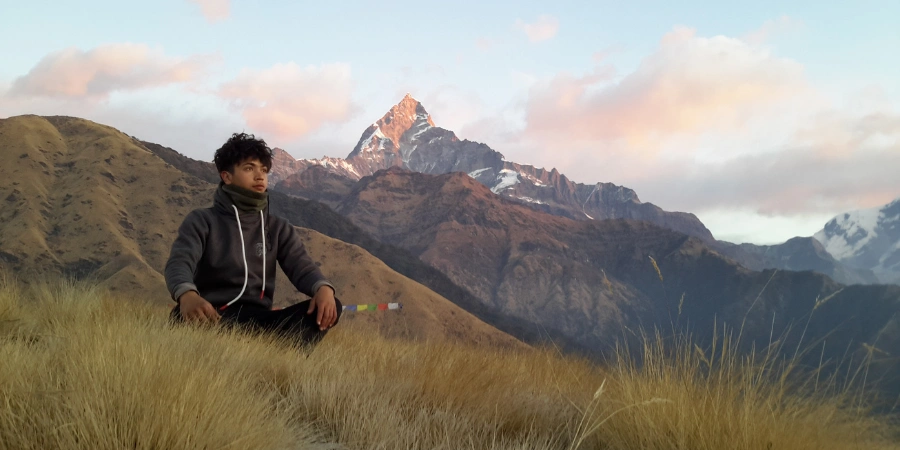
  2. How close Machhapuchhre feels Up at base camp or even High Camp, Fishtail Mountain is right there, almost too big to take in. Its twin summits look sharp enough to cut the sky, and since nobody's ever climbed it, it still feels untouched and sacred. You can sit on a rock for hours watching clouds wrap around the top or just drift away.
  3. The rhododendron forests in spring If you go in March or April, the lower trails turn into tunnels of pink and red flowers. The path is carpeted with petals, bees buzzing everywhere, and the smell is sweet and heavy. It's not just pretty, it makes the whole climb feel alive and colorful before you hit the bare ridges higher up.
  4. Walking almost empty ridges The trail stays quiet. You might see one or two small groups all day, but long stretches are just you, the path, and those open views. No constant stream of trekkers like Poon Hill. You can stop to take photos, eat a Snickers, or just sit without feeling rushed, and that space makes everything hit harder.
  5. Teahouse dinners with the family The places higher up are small, run by locals who live there year-round. You eat dal bhat or noodle soup at a long table with the owners, kids running around, maybe a fire crackling. They share stories about winter snow or yak herding, and it feels like you're a guest in their home, not just another tourist.
  6. The final push to Mardi Base Camp The last hour or two from High Camp is steep and rocky, lungs burning at 4,500 meters, but when you top out and see the full panorama open up, it all clicks. Machhapuchhre towers straight ahead, the Annapurna wall stretches left to right, and you realize you've earned every step. That sense of arrival is pretty unbeatable.
  7. Watching clouds play around the peaks at dusk Late afternoons and evenings, especially in autumn, the clouds roll in low and swirl around the summits. One minute the peaks are clear, the next they're half-hidden in mist, then they pop out glowing pink. It's mesmerizing to watch from your teahouse balcony with a cup of ginger lemon tea.
  8. The shift from green valleys to high alpine You start in banana trees and terraced fields, pass through pine and rhododendron, then suddenly you're above the tree line in open grassland and rock. The change happens gradually but feels dramatic, like walking into a different country. By the end you're in proper high mountains, and that progression keeps every day interesting.


Included and Excluded

Included :

  • Airport pick-up and drop-off private transfer
  • Transportation from start to End
  • Hotel in Pokhara and Kathmandu. Category 2-3 star
  • Farewell Dinner by Company
  • Trekking Accommodation, Twin Sharing in Basic Tea-house
  • English-speaking guides/ Who has excellent knowledge.
  • Porters for 2 guest one porter
  • All meals( Breakfast, Lunch & Dinner)
  • Fresh Fruits after dinner every evening.
  • All necessary documents and permits for trekking
  • Trekking equipment including sleeping bags
  • Staff insurance, medication and equipment
  • All Govt. and Local Taxes, First Aid Kit

Excluded :

  • International airfares, Kathmandu sightseeing and entrance fees
  • Travel/trekking insurance/ Nepal entry visa fees
  • Mountain rescue charges or insurance
  • Bottled drinks on trek (cold and alcoholic) and hot drinks
  • Lunches and dinners in Kathmandu and Pokhara
  • Additional food or drink on trek in addition to three standard meals
  • Personal expenses, Emergency Expenses, road blocked, snakes, desert.etc
  • Which is not mention in email
  • Tips(Tipping are expected)

Route Map

trip route map for Mardi Himal Trek

Frequently Asked Questions

Traveler Reviews

Verified customer feedback

How was your experience with us?

★ ★ ★ ★ ★

Related Packages

You May Also Love And Like
pacakge-image
Trekking
5 (0 reviews)
19 Days
30 pax
$1687 /person
pacakge-image
Trekking
5 (0 reviews)
11 Days
20 pax
$685 /person
pacakge-image
Trekking
5 (0 reviews)
10 Days
50 pax
$938 /person
pacakge-image
Trekking
5 (0 reviews)
11 Days
20 pax
$975 /person