
The Jomsom-Muktinath Trek in 2026: All You Need To Know
You step off the tiny plane in Jomsom, wind immediately slapping your face with fine dust, and think, "Okay, this is going to be different." By the time you finish the full loop, climbing from Pokhara's green foothills, crossing the Kali Gandaki's deepest gorge, soaking in Tatopani's hot springs, pushing through the arid upper valley to Muktinath's sacred waters, then dropping back to Jomsom, you've collected wind-burned cheeks, a pocket full of saligram fossils, sore quads from endless stone steps, and memories of sunrise light hitting Dhaulagiri and Annapurna that make the early alarms worth it.
This isn't the high-stakes altitude grind of Manaslu or the crowded Everest path; it's a mid-level trek that mixes physical effort with spiritual weight, Thakali hospitality, apple pie in teahouses, and a landscape that flips from lush subtropical to stark high-desert in a matter of days.
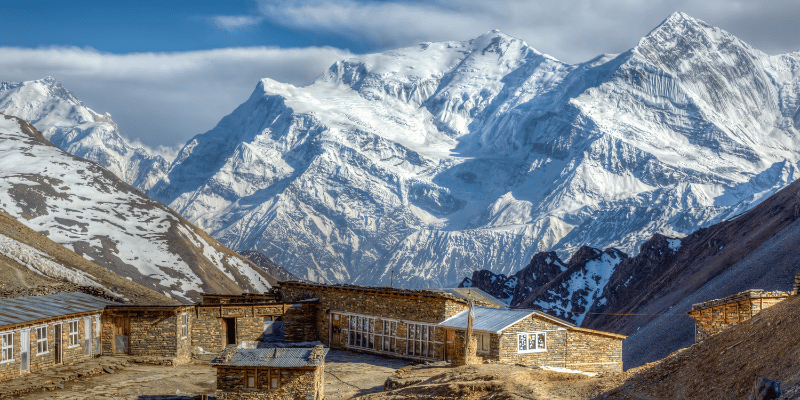
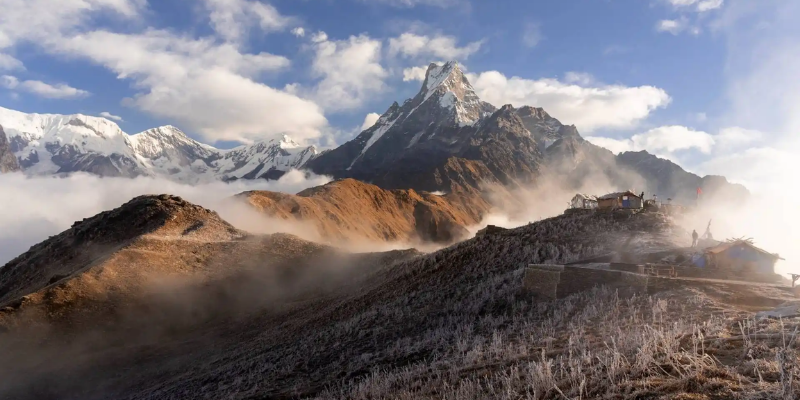
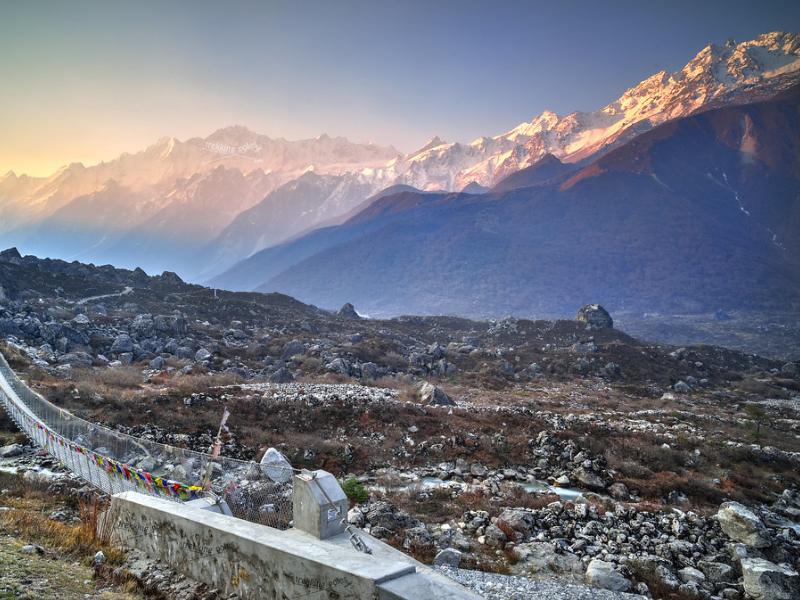
For many, Jomsom Muktinath is the ideal "next step" after something like Ghorepani Poon Hill. You get real Himalayan scale, Annapurna I, Dhaulagiri, Nilgiri, Tilicho, and Machhapuchhre dominating the skyline, without needing weeks or extreme fitness. The route follows one of Nepal's oldest trade corridors, where mule trains still haul salt and goods, bells clanging as they pass.
Pilgrims from India and beyond flock to Muktinath (one of the 108 Divya Desams for Hindus, a site of liberation in Buddhism), so you share trails with sadhus, families, and fellow trekkers, creating this mix of quiet reflection and lively teahouse chatter. The Kali Gandaki gorge, claimed as the world's deepest, funnels ferocious winds that keep the upper valley dry even in monsoon season, which means clear skies but also dust storms that force you to wrap a buff around your face like a bandit.
If you're comparing packages, Gorkha International Travel's 11-day Jomsom Muktinath Trekking keeps things practical and covered. Base price around $975 all-inclusive, but they advertise a best rate of $780, with group discounts kicking in hard: $665 for 2–4 people, $610 for 10+, and even lower for bigger parties.
That bundle includes airport pickups/drop-offs, 2–3 star hotels in Kathmandu and Pokhara (breakfast included), teahouse twin rooms on trek with full-board meals (breakfast, lunch, dinner, plus daily tea/coffee and fresh fruit post-dinner), a licensed English-speaking guide, porter (one shared between two trekkers), sleeping bag, Annapurna Conservation Area Permit (ACAP), TIMS card, transport to trailheads and back (including the short flights Pokhara–Jomsom–Pokhara), staff insurance, basic first-aid/oxygen kit, farewell dinner in Kathmandu, and all taxes.
Extras like personal snacks, hot showers (usually Rs 200–400), bottled water, tips, and travel insurance are on you. The real value is the no-headache logistics, permits sorted, flights booked, guide handling the wind-blown days, so you just focus on walking and soaking it all in.
What Makes This Trek Stick in Your Head Long After
The shift in scenery is what gets you. Day 1–2 feels like classic Nepal trekking: starting from Nayapul or Tikhedhunga, you wind through terraced rice fields, cross swaying suspension bridges over side streams, pass Gurung villages with kids running out to high-five, and climb those infamous stone steps (thousands, it feels like) into rhododendron forest. In spring, the blooms are insane, pink and red walls lining the path, bees buzzing, air smelling sweet.
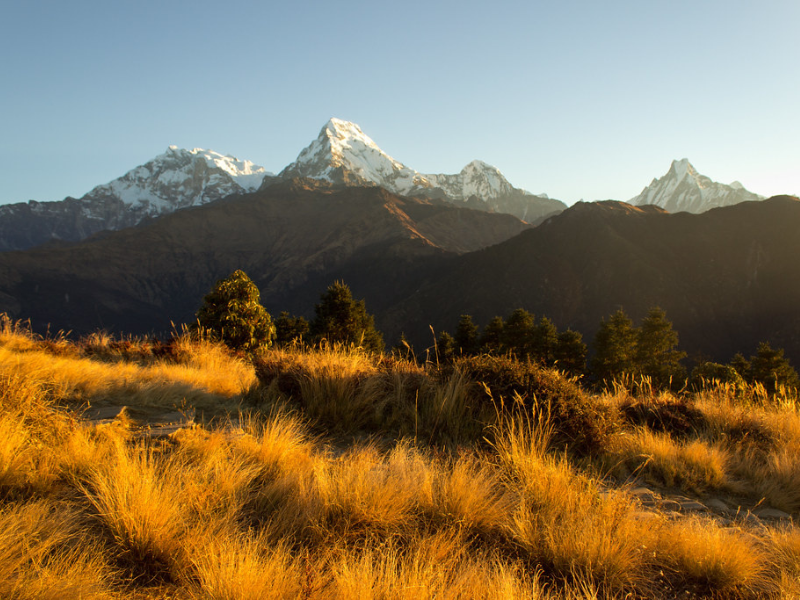
Ghorepani gives you Poon Hill sunrise if you want the extra climb: pre-dawn hike in the cold, then the whole Annapurna range lighting up pink while you sip hot tea from a thermos.
Then the descent to Tatopani changes everything. Long downhill through bamboo and oak, knees taking a beating, but ending at natural hot springs where you soak aching muscles in steaming pools while the Kali Gandaki roars below. Locals and trekkers alike linger there, trading stories about the day.
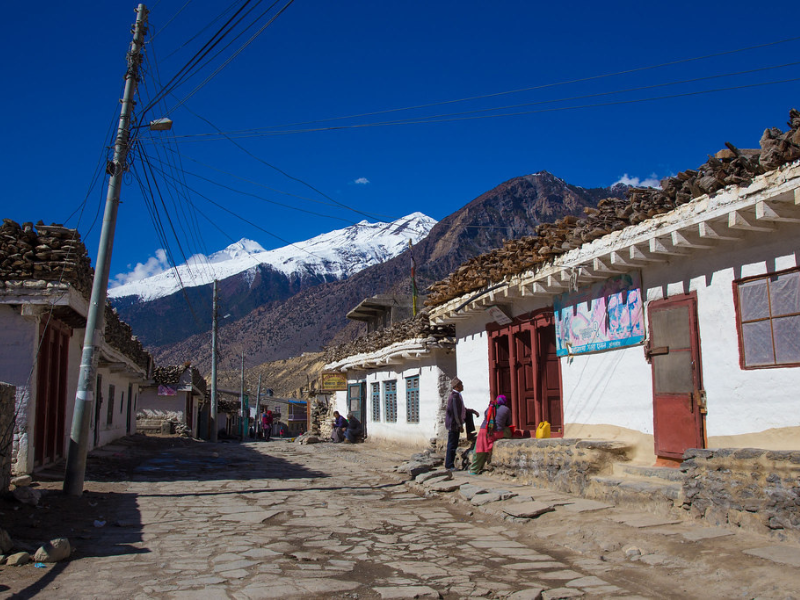
From Tatopani, you climb into the gorge proper, narrow canyon walls, river far below, wind starting to pick up. Kagbeni feels like the threshold: whitewashed houses, red gompas, prayer wheels creaking, and a sign warning you can't go north into Upper Mustang without the expensive permit. The village has a frontier feel, dusty streets, Tibetan-style roofs, teahouses serving smoky Thakali dal bhat with buckwheat roti.
Upper valley days are the heart of it. Wind hits hard, constant, carrying grit that sticks to lips and eyes. Paths are wide and dusty from mules, villages like Marpha and Tukuche appear like oases with apple orchards, cider presses, and bakeries selling fresh strudel or pie.
Thakali people here are known for their hospitality and food, smoky meats, herbal soups, strong raksi if you're invited. Muktinath arrives as a reward: temple complex with 108 brass spouts pouring holy water, eternal flame burning behind a grill, pilgrims bathing despite the cold. You circle the shrines, dip in the pools if you're brave, and feel the weight of centuries of devotion.
Descent back to Jomsom is easier on the lungs but hard on legs, wide trails, more wind, apple trees again. Jomsom itself is a small airport town with banks, shops, and a sense of arrival. The short flight out (if weather cooperates) gives aerial views of the gorge you just walked.
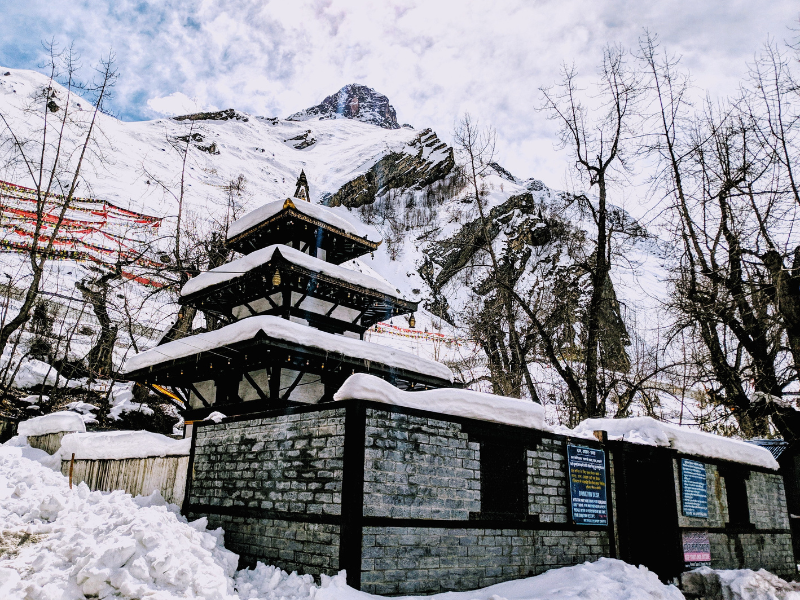
Snowy Landscape Of The Muktinath Temple (Source: Wikimedia Commons)
Trekkers I've talked to remember different parts: one loved fossil-hunting saligrams in the riverbed (sacred black stones sold everywhere), another the hot springs after the big descent, a third the temple's calm after days of wind. It's not the toughest trek physically, but the wind, dust, and cultural layers make it memorable in a different way.
Best Time: Picking a Window That Doesn't Fight You
Weather here is tricky, Jomsom flights cancel often in bad conditions, wind peaks midday, cold bites at night higher up.
Spring (March–May) brings life: rhododendrons in full bloom March–April, green valleys, mild days (10–22°C lower, cooler up high). Views sharp in mornings, fewer people than autumn. May can get dusty/hot lower down.
Autumn (September–November) is prime for most: post-monsoon clear air, blue skies, peaks standing out. October usually delivers calm winds some days, perfect light, comfortable temps. November colder (pre-dawn Muktinath can be freezing), but still great visibility.
Monsoon: mudslides, leeches, rain, clouds hiding everything, avoid. Winter: snow possible, stunning if you like it, but flights unreliable, wind brutal, cold intense (-10°C+ nights). For 2026, October or late March–April are safest bets for balanced weather and views.
Difficulty & Prep: What Your Legs Need to Know
Moderate overall, 5–7 hours walking most days, 70–90 km total. Stone steps early, long descents, windy/dusty upper paths. Altitude ~3,710m max, mild risk.
Prep realistically:
- 8–12 weeks: stairs/hills 3–4× weekly with pack.
- Cardio 45–90 min sessions.
- Strength: lunges/squats for steps.
- Test boots, practice wind (scarf/buff).
- Mental: accept dust/wind days.
Guides keep pace reasonable; porters help.
Altitude Basics Here
Low risk, gradual climb, no extreme nights. Drink lots, eat well, Diamox optional for sensitive folks.
Itinerary Details:
Gorkha International Travel's plan mixes flight, trek, drive:
- Day 1: Arrive Kathmandu (1,350m). Pickup, hotel, rest, briefing.
- Day 2: Kathmandu sightseeing/prep. Durbar Square, Swayambhunath; gear check.
- Day 3: Fly Pokhara (~30 min), trek to Tikhedhunga (1,552m, 4–5 hrs). Scenic flight, start trail through villages/forests.
- Day 4: Tikhedhunga to Ghorepani (2,750m, 6–7 hrs). Steps, terraces, rhododendron forests.
- Day 5: Ghorepani Poon Hill sunrise, trek to Tatopani (1,190m, 5–6 hrs). Epic views, then long descent; hot springs relax.
- Day 6: Tatopani to Kagbeni (2,804m, 5–6 hrs drive/trek mix). Kali Gandaki gorge, waterfalls, Tibetan-vibe village.
- Day 7: Kagbeni to Muktinath (3,710m, 5–6 hrs). River banks, dramatic valley, reach temple.
- Day 8: Muktinath temple visit, trek to Jomsom (2,715m, 5–6 hrs). Sacred sites, apple areas, windy paths.
- Day 9: Fly Pokhara (~20 min). Short airstrip walk, mountain views flight; free afternoon Lakeside.
- Day 10: Pokhara to Kathmandu (drive 8–9 hrs or fly 30 min). Scenic return, leisure.
- Day 11: Departure. Airport drop.
Flexible, some drive more, flight delays common in Jomsom.
Packing for This Specific Trek
Wind/dust focus: buff essential, windproof layers, sunglasses, lip balm. Rest same as other treks.
Costs & Package Edge
Package $610–$975 covers core, saves hassle. Groups drop price fast.
Final Take
This trek gives you spiritual depth, epic gorge, mountain views, and Thakali warmth without breaking you. If it calls, Gorkha International Travel has got you covered. Check out our full trekking package here.


Leave a Comment