
Nepal’s Hidden Gem: Your Go-To Guide for the Mardi Himal Trek in 2026
If you’ve ever dreamed about wandering deep into the Himalayas, away from the busy tourist crowds, Mardi Himal is probably just the kind of adventure you’re after. This trail sits quietly in the shadow of Annapurna, drawing in travelers who want jaw-dropping mountain views without all the chaos of places like Everest Base Camp. And with Nepal’s tourism scene bouncing back strong for 2026, now’s the best time to throw on your boots and see what everyone’s been whispering about.
I’ve walked this trail myself, and honestly, it’s magic. Picture forests bursting with color, cozy teahouses where the hosts remember your name, and those moments at sunrise when the mountains look surreal. This guide covers everything, big picture stuff, packing lists, costs, and why Mardi Himal could be your next great escape.
Mardi Himal Trek: The Basics
Imagine starting your journey in Pokhara, laid-back, lakeside, and just buzzing with adventure energy. A short drive, and you’re suddenly climbing through green valleys, heading straight for the heart of the mountains.
The Mardi Himal Trek is short and sweet, usually lasting four to seven days, depending on how fast you want to take it. It’s about 40 to 50 kilometers round trip, and sits in the “easy to moderate” range. So, if you’re new to trekking but reasonably fit, or you’re a seasoned hiker who wants something a bit lighter, you’re good to go.
The highest point is Mardi Himal Base Camp at 4,500 meters, high enough to feel like you’re standing on a rooftop above the world. Don’t mess around with the altitude though; take your time to acclimatize. It makes a difference.
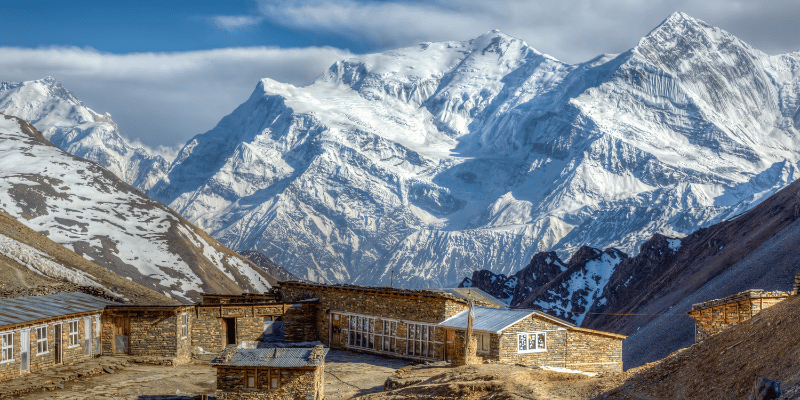
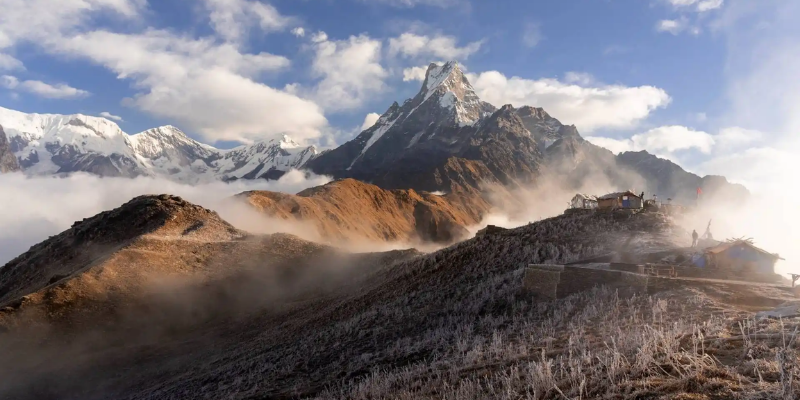
The trail usually kicks off from Kande or Dhampus, just an hour’s drive from Pokhara. You’ll wind through terraced farms, thick forests of oak and rhododendron (they explode with color in spring), and villages where the pace of life feels beautifully slow. Climb higher, and suddenly you’re in open meadows and rocky ridges, with wild, sweeping views of Machhapuchhre (that’s Fishtail), Annapurna South, and Hiunchuli.

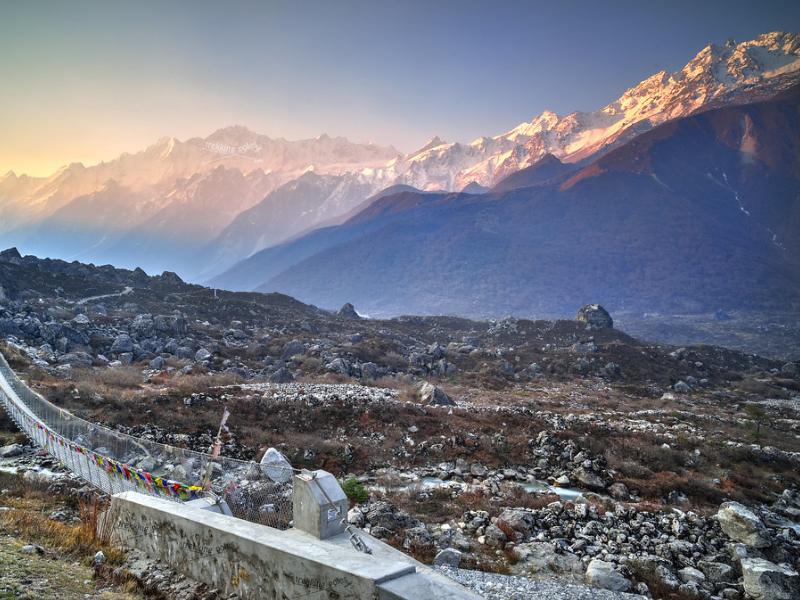
Way to Base Camp, Mardi Himal (Source: Wikimedia Commons)
It’s not just about the peaks either, keep your eyes open for bright birds and, if you’re lucky, a Himalayan tahr darting through the brush.
For 2026, the trail’s looking better than ever. Locals keep improving the teahouses and paths, so it’s all pretty comfortable without losing that remote feel.
Best time to go? Spring (March to May) if you want flowers and crisp skies, or autumn (September to November) for stable weather and clear mountain views. Skip the monsoon unless you’re weirdly into mud and leeches. Winter turns everything into a snow-globe scene, but it’s cold, bring layers and check if the trail’s open.
One of the best things about Mardi Himal is how easy it is to jump in. You don’t need fancy gear or months of prep. Solid boots, warm clothes, and a good attitude are plenty. It’s also way easier on your wallet compared to the big-name treks. Solo, with friends, even with your family (if your kids are up for it and over ten), Mardi Himal is a taste of Nepal that doesn’t need a ton of planning.
Highlights You Can’t Miss
What sticks with you from the Mardi Himal Trek? The moments. The views, seriously, you’ll be talking about those for years. From High Camp at 3,550 meters, sunrises over the Annapurna range will leave you speechless. Picture yourself holding a steaming mug of tea as the first light hits Fishtail’s sharp summit, everything bathed in gold. Photos don’t do it justice.
The trek itself is packed with small victories. Early on, you’ll pass through Australian Camp, a grassy spot with epic views, perfect picnic territory. At Forest Camp (2,600 meters), you’ll duck into shadowy woods where the air smells like pine, and if it’s spring, the ground is just covered in pink and red rhododendron flowers. Feels a bit like walking through a storybook.
Then there’s the culture. The Gurung and Magar villages along the trail are warm and welcoming. Stop in Sidhing or Lwang, grab a plate of dal bhat, and chat with the locals. This isn’t just a trek for your legs, it’s a trek for your soul.
Many teahouses along the route are run by families, so you’ll end up with homemade food and maybe a few stories about mountain life thrown in. It’s one of those reminders that trekking isn’t just about ticking off a destination, it’s about the people you meet and the places you pass through.
Getting to Mardi Himal Base Camp feels like the big moment. The last bit is tough, think steep, skinny ridges, but wow, the reward is huge: a full-circle view of the Himalayas with Mardi Himal right in your face. If the weather’s clear, you can spot Dhaulagiri way out west. And it’s a lot quieter than Annapurna Base Camp, so sometimes you’ll have the whole place to yourself. Great for just soaking it all in or nabbing those photos.
Don’t skip the side trips. Take a short detour to Badal Danda for even bigger views, or, if there’s time on your way back, go soak in the hot springs at Jhinu Danda. Wildlife keeps things interesting too, watch for langur monkeys swinging through the trees or eagles circling overhead. If you’re up late, the stargazing higher up is unreal. The Milky Way just explodes above you, no city lights in the way.
By 2026, more eco-friendly efforts mean you can feel good about your trek supporting sustainable tourism. Local guides will show you how to keep your impact low, stick to the paths and skip single-use plastics.
Breaking Down the Costs for Your 2026 Mardi Himal Adventure
Trekking means budgeting, but Mardi Himal is actually one of Nepal’s cheaper options. In 2026, figure on $400 to $900 per person, depending if you trek solo or book a package. That covers everything from permits to porridge and is way less than some of the other big-name treks.
Here’s the breakdown: First, permits. You need the Annapurna Conservation Area Permit (ACAP), about $30, and a TIMS card for another $20. Both are easy to grab in Pokhara or Kathmandu, and if you hire a guide, they’ll usually sort this out for you.
Next up, transport. Flights from Kathmandu to Pokhara cost $100-150 round trip. If you’re on a tight budget, you can take the bus for $10-20, though you’ll be rattling around for 7-8 hours. From Pokhara to the trailhead (like Kande), a taxi or jeep costs $20-40 one way. Coming back, you can bus it again or splash out on a return flight.
For places to sleep and eat, teahouses are simple but cozy. Rooms usually run $5-10 a night (often shared). Meals, think dal bhat or momos, average $5-8, so plan on $20-30 a day for food. Water’s another thing: bring purification tablets to fill up from taps. Bottled water costs $1-2 each, but those add up and just create more trash.
Guides and porters? Costs jump here. If you go solo, it’s cheaper, but hiring a licensed guide ($25-35 per day) is smart, they know these trails inside out. A porter to lug your bag (up to 15kg) is $15-25 daily. For a five-day trek, that’s $100-150 each. Lots of people just book a package through agencies in Pokhara, which starts at $400 for basics (guide, permits, food) and goes up to $700-900 for more comfort, nicer lodges, insurance, the works.

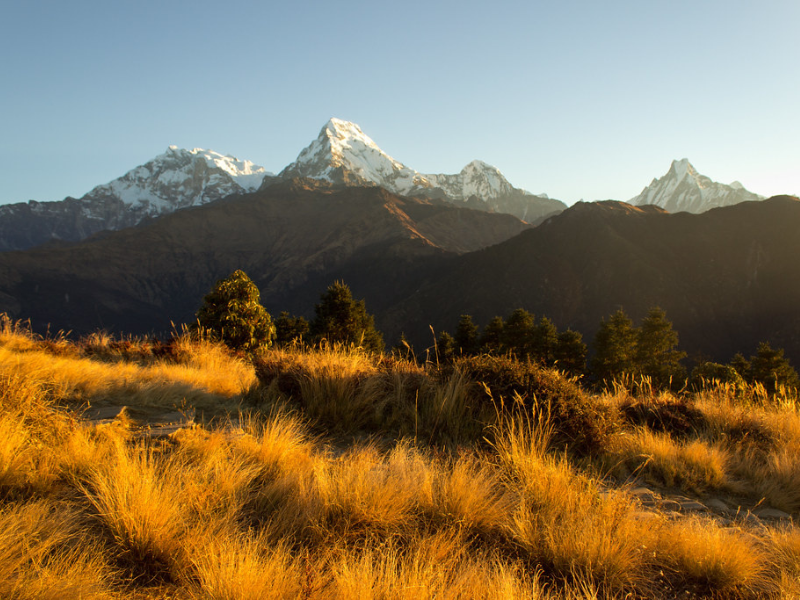
Trail of Mardi Himal Trek (Source: Wikimedia Commons)
Don’t forget the extras. Travel insurance with emergency evacuation? Must-have: $50-100 for a week. Tipping guides/porters runs $20-50 total. Snacks, hot showers ($2-3), Wi-Fi ($2-5 per use), all add $50-100. If you hang out in Pokhara after, budget $20-50 a day for hotels and meals.
So, if you’re pinching pennies and going solo, $300-500 can do it. Mid-range with a guide, $500-700. Fancy groups, $800 and up. If you have a group of two to four, you’ll get some discounts. Prices in 2026 might go up 5-10% thanks to inflation, but there are always deals, especially during quieter months. Just remember to bargain (nicely) in Pokhara and always carry enough Nepali rupees, no ATMs once you’re on the trail.
Essential Packing Tips for a Smooth Trek
Packing for Mardi Himal? It’s all about layers and keeping things light. Try to keep your backpack under 15kg if you’re carrying it yourself, porters can handle more, but don’t overdo it. Weather flips fast: warm valleys (20°C/68°F) and cold nights (0°C/32°F or colder), so you need clothes that work for both.
Start with the basics: moisture-wicking shirts and thermal underwear for chilly nights. Add a fleece jacket or wool sweater for warmth, and a waterproof jacket and pants, rain shows up out of nowhere. Quick-dry trekking pants are great, plus a set of thermals. You’ll want gloves, a warm hat, and something for your neck and face, like a buff. For socks, 3-4 pairs of wool or merino keep blisters away. Underwear? Bring 5-7 pairs, quick-dry if you can.
Boots are huge, make sure they’re sturdy, broken in, and give your ankles support. Bring sandals or camp shoes for evenings. Crampons only if you’re trekking in winter, but they’re not usually needed.
Gear-wise: a sleeping bag rated to -10°C (14°F) is a good bet, though teahouses have blankets. Trekking poles help on the steeper bits. A headlamp (with spare batteries) is a must, power cuts happen. Bring a 1L water bottle and purification tablets or a filter. Your first-aid kit should have bandages, painkillers, altitude meds (chat with your doctor), blister pads, sunscreen, and lip balm.
Essentials: a 40-50L backpack, plus a daypack if you have a porter. Toiletries, biodegradable soap, toothbrush, wet wipes (showers aren’t always an option), towel, toilet paper. Snacks like energy bars and nuts are handy, since teahouse food can get repetitive.
Tech stuff first: Bring your phone or camera, and a portable charger, solar’s handy if you can swing it. Signal’s still spotty up there, but it’s getting better. Don’t forget cash, passport copies, and your permits. Sunglasses and a hat are essential; that sun is no joke.
A few tips: Use reusable bags to keep your gear organized. Seriously, test everything before you leave. For women, pack sports bras and whatever you need for your period. Go easy on plastics, bring refillable bottles and containers instead. If you’re flying in, double-check the airline’s weight limits. And don’t overpack. You can always pick up basics in Pokhara if you forget something.
Now, why pick Mardi Himal for your 2026 adventure? Honestly, every time I think about my own trek, I grin. There’s something about that crisp mountain air, swapping stories around a teahouse fire, and finally reaching base camp that just sticks with you. Mardi Himal isn’t just another hike. It’s a chance to recharge, push yourself a little, and come home with memories you’ll want to retell.
With travel getting easier in 2026, this is the perfect way to dive into Nepal’s wild side. Go in ready, be respectful to locals and the land, and roll with whatever comes your way, a burst of snow, a deep chat with a fellow hiker, whatever. Looking for some solitude? You’ll find it. Want to connect? The trail’s full of friendly faces. So really, what’s holding you back? Grab your boots, snag that ticket, and let 2026 be the year you uncover one of Nepal’s gems. Safe travels, and may the mountains treat you well.
Book Our Mardi Himal Trek Here



Leave a Comment