
Nepal World Heritage Tour 2026: 5-Day Kathmandu Valley
Landing in Kathmandu after a long flight, the first thing that hits you is the mix of sounds, honking taxis, temple bells, street vendors calling out, and the low hum of prayer wheels spinning at Boudhanath. You step out of the airport, meet your driver holding a sign with your name, and suddenly you're on the way to Thamel or Boudhanath, traffic weaving around cows and motorbikes.
By the time you check into your 4-star hotel, unpack, and grab a quick momo or plate of dal bhat from a nearby spot, the jet lag starts to fade because tomorrow you're diving into what makes this city, and Nepal, one of the most culturally dense places on Earth.
This 5-day Nepal World Heritage Tour from Gorkha International Travel is built for exactly that: a comfortable, guided exploration of the Kathmandu Valley's seven UNESCO-listed sites (yes, the valley packs in seven of Nepal's ten total World Heritage listings), plus a meaningful day trip to Lumbini, the birthplace of Lord Buddha. It's not a rushed checklist, it's paced with private vehicles, knowledgeable local guides who explain the layers of history, good hotels with breakfast included, and enough free time to wander on your own.
Starting from US$600 per person (with 20% off the original $750, and better rates for groups: down to $425 for 21–36 people), it includes airport transfers, 4-star hotel stays in Kathmandu on bed-and-breakfast basis, all entrance fees to monuments, private car/jeep/Hiace transport for sightseeing, English-speaking guide, and support throughout. Meals are breakfast daily, plus lunch on sightseeing days; dinners are usually on your own so you can try different spots in Thamel.
It's easy, no trekking boots needed, max altitude around 1,400m, just comfortable walking shoes, modest clothing (shoulders and knees covered for temples), sunscreen, hat, and a camera or phone for the endless photo ops. Perfect for first-timers to Nepal, families, couples, or anyone wanting culture without physical strain. All seasons work, but October–November and March–April stand out for clear skies, mild weather (15–25°C days), and festivals adding extra color.
Day 1: Touchdown in Kathmandu – Settling In and First Impressions
Your flight lands at Tribhuvan International Airport, and Gorkha's rep is waiting with a sign. Bag collection is quick (or chaotic, depending on the day), then a 30–45 minute transfer through Kathmandu's streets, past brick houses, street dogs, and glimpses of stupas, to your hotel in Thamel (bustling tourist hub with shops, cafes, live music) or Boudhanath (quieter, centered around the massive stupa).
Check in, freshen up, and the afternoon is free. Many head straight to Thamel for a wander: narrow lanes packed with pashmina shops, trekking gear stores, bakeries selling cinnamon rolls, and restaurants serving everything from Newari bara (lentil pancakes) to momos (steamed dumplings) with spicy tomato achar.
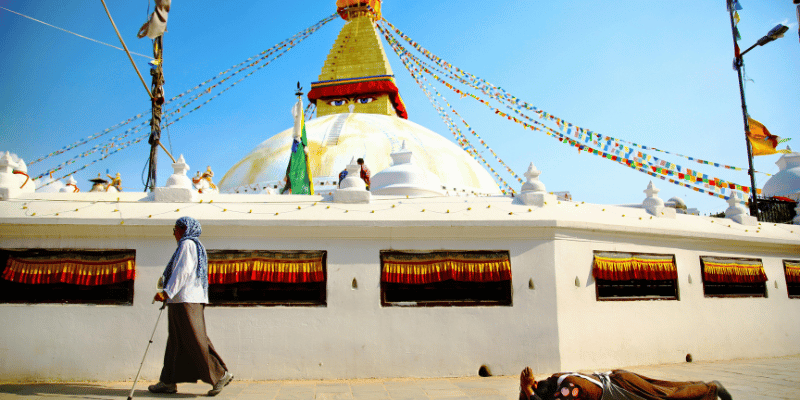
If you're in Boudhanath, walk the stupa's circumference (kora), spin prayer wheels, watch locals prostrating or lighting butter lamps, and grab tea at a rooftop cafe overlooking the white dome and golden spire.
Evening brings your first included dinner, likely at a local spot with dal bhat (lentils, rice, veg curry, pickles), perhaps some Newari specialties like choila (spicy grilled meat) or yomari (sweet rice dumplings). Early night to shake off travel fatigue, tomorrow starts the real sightseeing.
Day 2: Boudhanath, Pashupatinath, and Swayambhunath – The Spiritual Trio
Breakfast at the hotel around 8 AM: eggs, toast, fresh fruit, juice, Nepali options like aloo tarkari (potato curry) with roti or sel roti (rice doughnut). Meet your guide in the lobby, pile into a private vehicle, and head first to Boudhanath Stupa, one of the largest spherical stupas in the world, a UNESCO site since 1979.
You walk clockwise around the base (kora), passing pilgrims turning wheels, monks in maroon robes, and shops selling singing bowls, thangka paintings, and incense. Climb the steps to the terrace for views over the dome, eyes of Buddha gazing out, and the city beyond. Your guide explains the symbolism: the 13 steps of the spire representing stages to enlightenment, the harmika box as the enlightened mind.
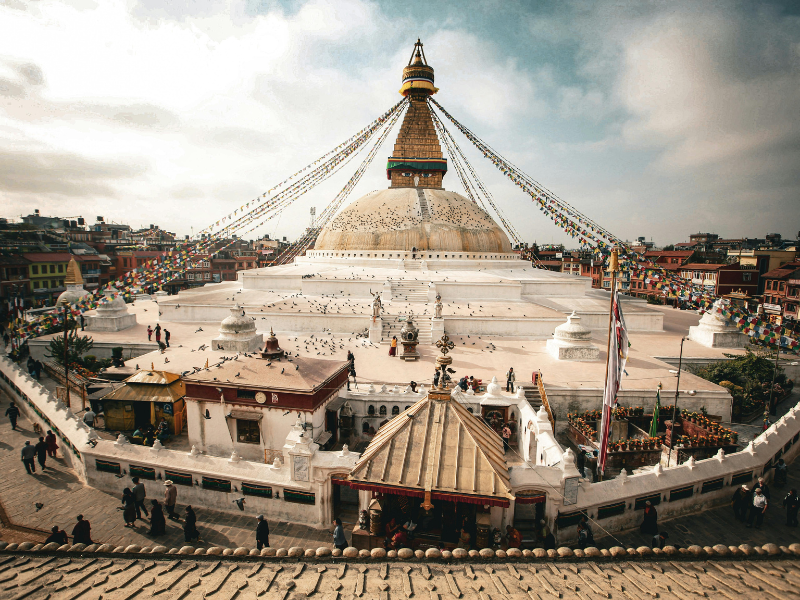
Boudhanath Temple (Source: Pexels)
Next, a short 20–30 minute drive to Pashupatinath Temple, the most sacred Hindu site in Nepal, dedicated to Lord Shiva as Pashupati (Lord of Animals). Non-Hindus can't enter the main temple, but you explore the grounds: ghats along the Bagmati River where cremations happen openly (a profound, raw experience, guides handle it sensitively), sadhus in orange robes posing for photos (tip if you do), lingams, shrines, and footbridge views. The air carries sandalwood and ghee from rituals.
Lunch nearby, perhaps veg thali or chicken curry at a clean spot, then afternoon to Swayambhunath, the Monkey Temple. Drive 30–45 minutes uphill. Climb the 365 steps (or take a vehicle if knees protest), pass monkeys (hence the name), reach the stupa with its massive eyes, prayer wheels, and panoramic valley views. Sunset here is magic if timing works, golden light on the city and distant peaks.
Back to hotel by 5–6 PM. Free evening: Thamel dinner (try Newari set with beaten rice, grilled buffalo, spicy dips) or relax with a beer on a rooftop.
Day 3: Patan and Kathmandu Durbar Squares – Newari Art and Royal Legacy
Hotel breakfast: same spread, maybe puri (fried bread) with aloo sabji today. Private car to Patan Durbar Square (30 minutes), one of the three medieval royal cities in the valley, a UNESCO site.
Patan (Lalitpur) shines with craftsmanship: Golden Gate entrance, Krishna Mandir with 21 spires and intricate Ramayana carvings in stone, Taleju Bhawani Temple, Mul Chowk courtyards. Patan Museum inside holds bronze statues, wood carvings, and religious artifacts, worth the time for anyone interested in art/history. Wander alleys, watch artisans hammer metal, buy handmade jewelry or thangka if you like.
Lunch at a traditional Newari place: samay baji (beaten rice platter with buffalo meat, lentils, pickles), or bara/chatamari (rice pancakes).
Afternoon: Kathmandu Durbar Square (Basanthapur). Hanuman Dhoka palace complex, Kumari Ghar (living goddess house, see if she's at the window), Taleju Temple, giant bell, Kasthamandap (legendary wooden structure). Guides detail Malla kings, festivals like Indra Jatra, and how earthquakes (2015) damaged but restoration continues.
Return by 4–5 PM. Evening free: shop Thamel for pashmina, singing bowls, or enjoy rooftop dinner with valley lights.
Day 4: Bhaktapur Durbar Square and Changu Narayan – Medieval Charm and Ancient Vishnu Temple
Breakfast: eggs, toast, fruit, perhaps puri or Nepali tarkari. Drive 45 minutes to Bhaktapur Durbar Square, another royal city, UNESCO-listed, known for preserved medieval architecture.
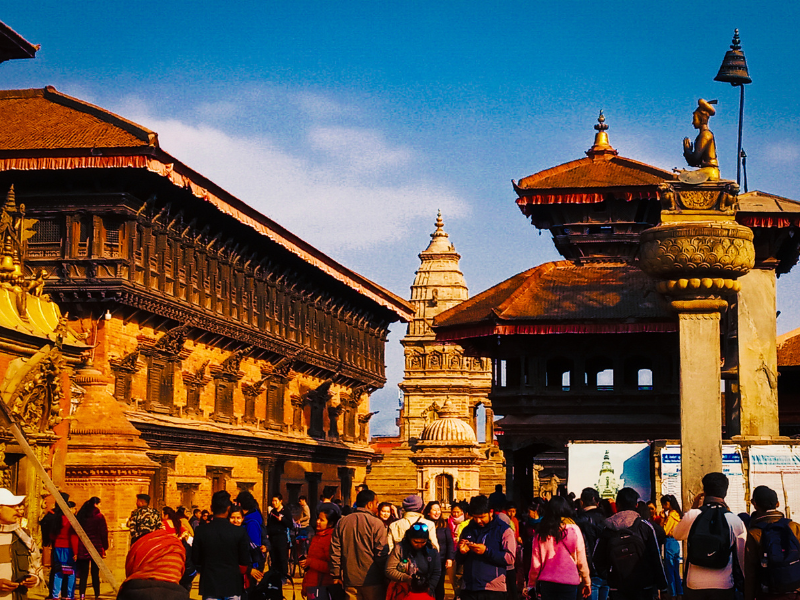
Explore 55-Window Palace (intricate wood carvings), Golden Gate, Lion Gate, Nyatapola Temple (five-tiered, climb for views), Bhairava Nath and Vatsala temples. Potters' Square shows clay work, streets have curd shops (juju dhau, king curd, creamy and sweet). Lunch traditional: dal bhat, wo (lentil patties), thali.
Then 30–45 minutes uphill to Changu Narayan, the oldest temple in the valley (4th–5th century), dedicated to Vishnu. Stone carvings of Vishnu's avatars, museum with ancient statues, hilltop views over valley and mountains.
Back to Kathmandu by 5–6 PM. Last evening free, perhaps a cultural dinner show (Thakali or Newari dances, music) or quiet meal.
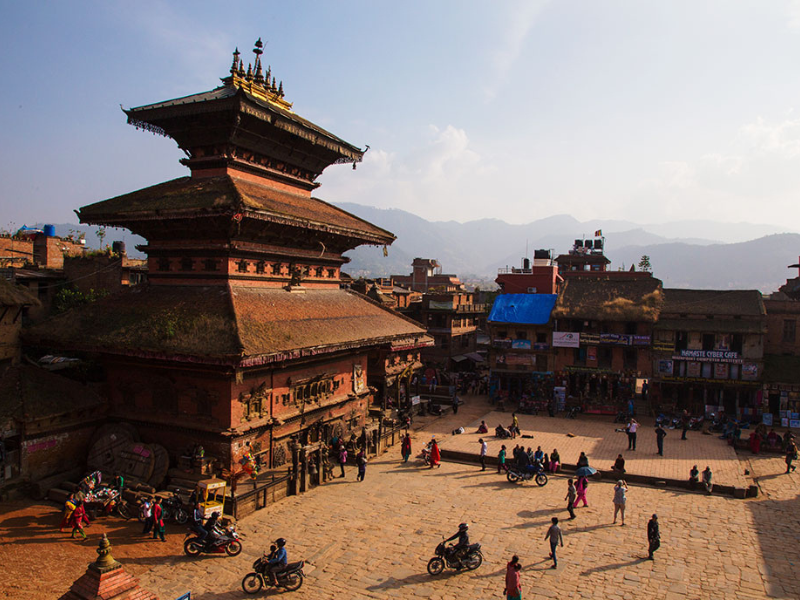
Dubar Square (Source: KIMKIM)
Day 5: Departure – Or Extend Your Nepal Journey
Hotel breakfast, check out (late if flight allows). Airport transfer (30–45 minutes), assistance with check-in. Flight home, or extend: Chitwan for wildlife safari, Pokhara for lakes/mountains, or a short trek.
Why This Tour Fits So Many Travelers
It's accessible: no long drives, comfortable hotels, private transport, guides handling crowds/explanations.
Cultural depth: seven UNESCO sites (Boudhanath, Pashupatinath, Swayambhunath, Kathmandu Durbar Square, Patan Durbar Square, Bhaktapur Durbar Square, Changu Narayan) showcase Newari art, Hindu/Buddhist harmony, living heritage.
Best for 2026:
Spring (March–May) for blooms and festivals
Autumn (Sept–Nov) for clear skies and perfect weather
Winter for quieter travel and lower prices
Monsoon for lush greenery but hazy mountain views
Gorkha makes it seamless, experienced guides, secure payments, customization if needed (add Lumbini fully or Chitwan).
If Nepal's heritage calls, this tour delivers without overwhelm. Contact Gorkha International Travel for dates or tweaks, Kathmandu waits with open arms.
Read our trekking package for a detailed overview of the Nepal World Heritage Tour.

Leave a Comment