
Ghorepani Poon Hill Trek In 2026
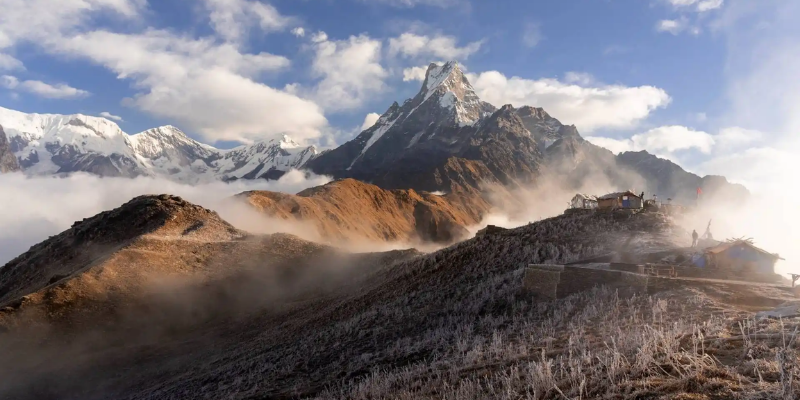
That pre-dawn wake-up in Ghorepani hits different. You fumble for your headlamp, stuff yourself into every warm layer you brought, grab a quick sip of hot water, and start the steep, dark climb up to Poon Hill at 3,210 meters. Your legs burn a bit from the day before, your breath comes short in the cold, but then the sky starts to lighten and suddenly the whole Annapurna massif lights up, Annapurna I, Annapurna South, Hiunchuli, Machhapuchhre (that perfect Fishtail shape), and Dhaulagiri all turning from gray to pink to blazing gold. People stand quietly, some snapping photos, others just staring, and for a few minutes the world feels still. It's one of those simple, powerful moments that makes the whole trek worth it, even if your quads are screaming on the way down.
Ghorepani Poon Hill isn't the epic multi-week odyssey some people chase in Nepal. It's shorter, lower, closer to Pokhara, and way more approachable, especially if this is your first time in the Himalayas, you're traveling with family, or you only have 10–12 days total.
You get big mountain views, classic stone-step trails, Gurung villages full of life, and forests that explode with rhododendrons in spring, all without the high-altitude drama or long, draining days of something like Everest Base Camp. The highest point is Poon Hill itself, and most people handle the elevation fine with just good hydration and a slow pace.
The route starts from Nayapul (a short drive from Pokhara), climbs steadily through terraced rice fields and small settlements, hits the rhododendron zone, reaches Ghorepani for the famous sunrise, then loops down through more villages and forests before finishing back near Pokhara.
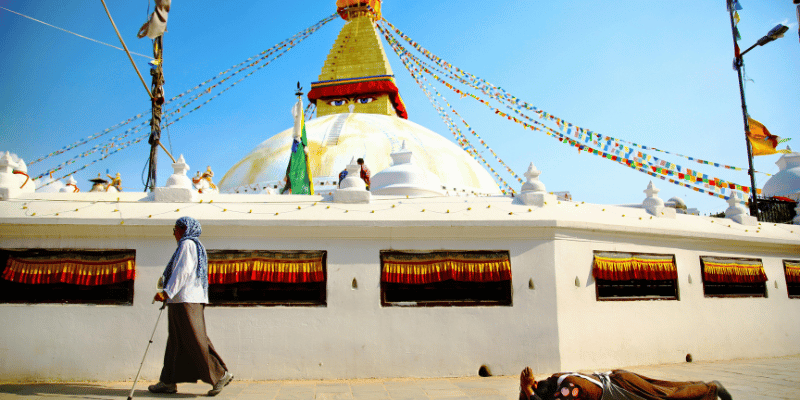
Along the way you cross suspension bridges swaying over rivers, pass prayer wheels and chortens, and stay in teahouses where the owners often cook whatever fresh veggies they have that day. It's real Nepal, farmers plowing fields with buffalo, kids running alongside you yelling "Namaste!", women weaving bamboo baskets, and teahouse aunties pouring endless cups of masala tea or lemon ginger while they ask where you're from and how you like the food.
If you're looking at packages, Gorkha International Travel's 10-day Ghorepani Poon Hill option is straightforward and well-supported. It runs from about $750 per person (drops to $625 or lower for bigger groups, with their best-price promise), and includes airport pickups, hotels in Kathmandu and Pokhara (breakfast included), transport to/from Pokhara (private jeep or optional flight), teahouse stays on the trail, three meals a day while trekking, a licensed English-speaking guide, a porter shared between two people, a sleeping bag, the Annapurna Conservation Area Permit (ACAP), TIMS card, basic first-aid and oxygen if needed, staff insurance, and all government taxes.
No hidden fees on the main stuff, so you can relax and enjoy the walk instead of stressing logistics.
Why This Trek Hooks People In
The real draw is balance. You get that wow-factor sunrise without needing superhuman fitness or weeks on the trail. Poon Hill delivers one of the best panoramic views in the Annapurnas for the effort, over a dozen peaks in a single sweep, often with the morning mist rolling below like a sea. But it's not just the big vista; it's the smaller things that stick.
Ulleri's stone steps (3,000+ of them) feel endless going up, but once you're past them the trail opens into oak and rhododendron forest where the air smells like pine and flowers. In spring the reds and pinks are so vivid it looks painted. Ghorepani itself has a buzz, multiple teahouses, a few bakeries baking fresh cinnamon rolls and apple pie that taste incredible after days of dal bhat.
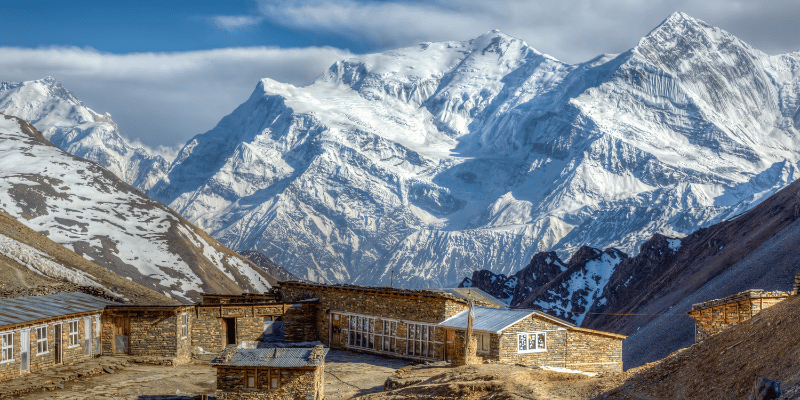
Ghandruk on the descent is a highlight: traditional Gurung stone houses stacked on the hillside, a small community museum showing old tools and clothing, and views of Annapurna South that feel close enough to touch.
The people make it special too. Gurung families have lived here for generations, many men served in the Gurkha regiments, so you'll hear stories in broken English over dinner. Guides often come from these villages and point out family homes or share bits of local history. Teahouse owners treat you like guests, not just customers, extra blankets when it's cold, hot water bottles for your sleeping bag, or just sitting down to chat about the weather or the crops.
Wildlife is low-key but present: gray langurs crashing through trees in the lower sections, Danphe pheasants strutting across paths, occasional Himalayan monal if you're lucky. Monkeys sometimes raid unattended packs, so keep an eye on your stuff. And the soundscape, river roar, wind in the pines, distant bells from grazing yaks, creates this calm that's hard to find elsewhere.
For families or older trekkers, it's forgiving: days aren't too long, villages every few hours for breaks, and porters make the load light. Beginners love it because success feels achievable, the sunrise reward comes early, and the rest is downhill-ish. Experienced hikers use it as a warm-up or recovery trek. Everyone comes away with the same thing: that quiet pride of having seen the mountains up close, plus sore legs and a camera full of photos.
Best Time to Trek: Seasons That Deliver the Goods
The Annapurnas have clear winners for weather. For 2026, aim for spring (March–May) or autumn (September–November) if you want the best combination of clear views, dry trails, and bearable temperatures.
Spring is flower season. Rhododendrons start blooming in late March and peak in April–May, turning entire hillsides electric pink and red. Days warm up nicely (10–22°C in lower areas), nights stay chilly (5–10°C at Ghorepani), but the forests feel alive, birds everywhere, butterflies, new green shoots. Views can be hazy some days from dust or heat, but when clear they're stunning. Crowds pick up in April but never feel overwhelming.
Autumn is the photographers' favorite. After monsoon the air is washed clean, skies go deep blue, and peaks stand out sharp. October usually nails it, crisp mornings (around 5–15°C), little wind, golden sunrise light that makes the snow glow. November stays good but gets colder fast; pre-dawn at Poon Hill can dip below freezing, so pack extra layers. Fewer clouds mean reliable mountain views almost every day.
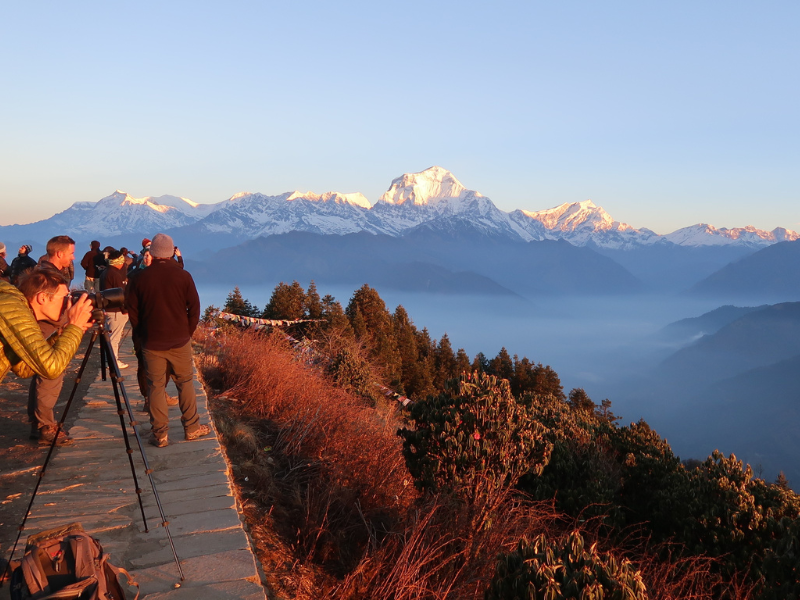
Sunrise From Poon Hill (Source: Wiki Commons)
Monsoon (June–August) is rough: constant rain, slippery stone steps, leeches on the trails, frequent landslides blocking paths, and mountains hidden in cloud. Most operators pause treks then. Winter (December–February) brings snow higher up, Poon Hill can be magical with fresh powder, but nights drop to -5°C or lower, trails get icy, some teahouses close, and early starts are brutal cold. If you're okay with bundling up and fewer people, it's doable; otherwise stick to the dry seasons.
For 2026, book early for October or April, those months fill fastest because the weather and scenery line up perfectly.
How Tough Is It? Difficulty and How to Prep
Easy to moderate overall, but the stairs make it feel harder than the mileage suggests. Total distance is about 50–60 km, with most days 4–7 hours of walking. Elevation gain/loss is significant on a couple days (Ulleri climb ~1,000m up stone steps, Ghandruk descent similar down), but spread out.
No ropes, no ice, no high passes, just steady uphill and downhill on well-used paths. The pre-dawn Poon Hill hike is short but steep in the dark and cold. Knees take the biggest beating on descents.
You don't need elite fitness, but basic prep helps a lot. Start 6–8 weeks ahead:
- Walk stairs or hills 3–4 times a week with a daypack (5–8 kg to simulate porter weight).
- Build cardio with brisk 45–60 min walks, jogging, or cycling.
- Do leg exercises: squats, lunges, step-ups to strengthen quads and calves.
- Practice downhill walking, use trails or stairs to train eccentric control and avoid soreness.
- Break in your boots fully; new shoes = blisters.
Many people show up with average fitness and make it fine, guides slow the pace, porters carry the heavy stuff, and teahouses give frequent rest spots. Hydrate, eat well, take it slow on ascents, and stretch at night. If you can comfortably walk 10–12 km with hills back home, you're set.
Altitude: Low Risk, But Stay Smart
Max 3,210m means serious Acute Mountain Sickness is very uncommon. Most feel only mild effects like slight headache or tiredness if they rush the climb to Ghorepani. The itinerary builds gradually, no big jumps.
Still, smart habits prevent issues:
- Drink at least 3–4 liters daily, more on sunny days.
- Load up on carbs: teahouse dal bhat, rice, noodles keep energy steady.
- Limit alcohol and strong coffee above 2,000m, they dehydrate.
- If you're prone to altitude stuff, ask your doctor about low-dose Diamox starting a day before Ghorepani.
- Headache or nausea? Stop, rest, hydrate. Descend if it worsens (rare here).
Guides watch everyone and carry oxygen for emergencies. Travel insurance covering trekking (up to 4,000m) is wise, though helicopter evac is almost never needed on this route.
The 10-Day Itinerary Step by Step
Gorkha International Travel's standard plan gives breathing room:
- Day 1: Arrive Kathmandu (1,300m). Airport pickup, check into Thamel hotel, rest or wander markets.
- Day 2: Drive or fly to Pokhara (850m). Scenic 7–8 hr drive or quick 30 min flight, settle into Lakeside hotel, stroll Phewa Lake.
- Day 3: Drive to Nayapul, trek to Tikhedhunga or Ulleri (1,577m/2,070m). 4–6 hrs through villages, river gorges, start of the famous steps.
- Day 4: Ulleri to Ghorepani (2,860m). 5–7 hrs up through rhododendron forest, occasional Machhapuchhre glimpses, arrive to bakeries and warm stoves.
- Day 5: Early Poon Hill sunrise (3,210m, 45–60 min up), back for breakfast, trek to Tadapani (2,630m). 5–7 hrs total with epic morning views and forest walking.
- Day 6: Tadapani to Ghandruk (1,940m). 3–5 hrs descent through bamboo and oak, arrive to Gurung village, explore museum, enjoy views.
- Day 7: Ghandruk to Nayapul, drive to Pokhara. 4–6 hrs trek down terraces, short jeep ride, afternoon free for lakeside cafes.
- Day 8: Full rest day in Pokhara. Optional boating on Phewa, World Peace Pagoda hike, paragliding, or just relax with coffee and mountain views.
- Day 9: Pokhara to Kathmandu. Drive (7–8 hrs) or fly, farewell group dinner in Thamel.
- Day 10: Departure day. Airport transfer, or extend for Chitwan safari or more Pokhara time.
The plan has flexibility, some people fly Pokhara–Kathmandu both ways to save time, or add extra rest if needed.
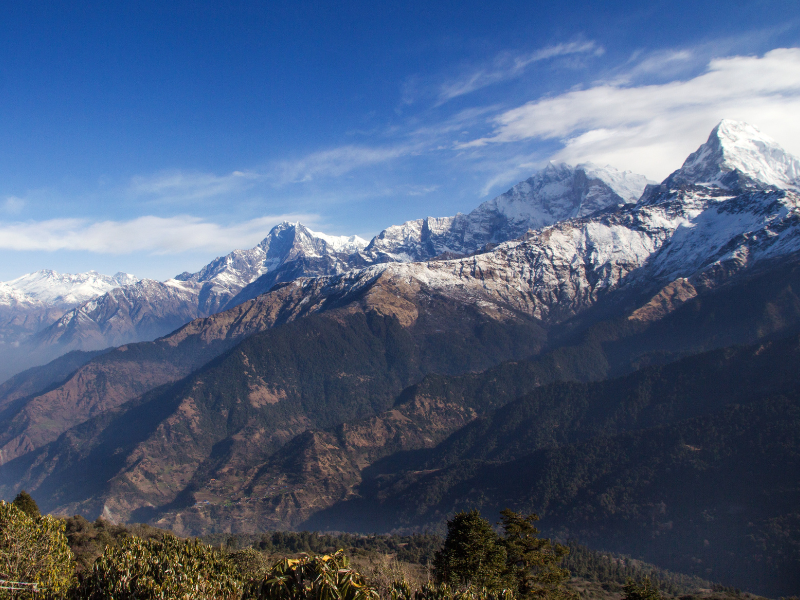
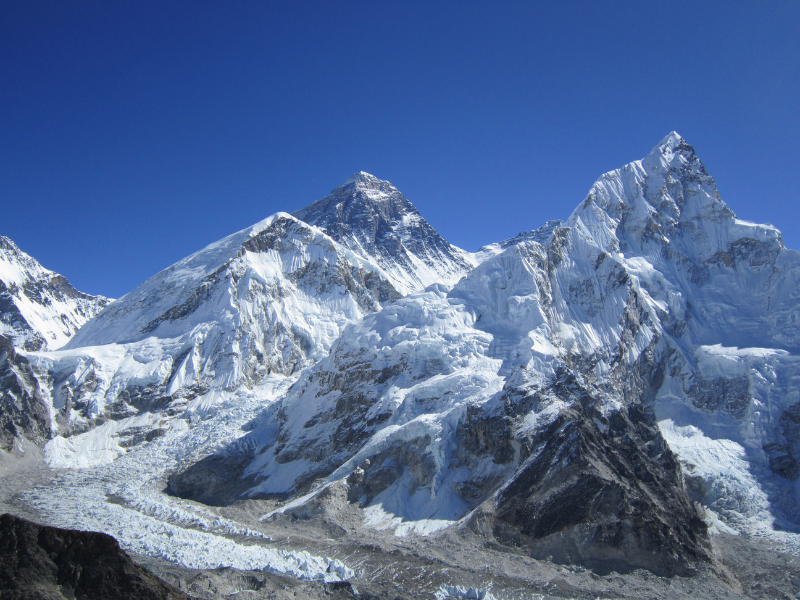
Mountain View From Poon Hill Trek (Source: Wiki Commons)
Packing: Essentials for Comfort
Porters take 10–15 kg total, so keep your daypack light (5–8 kg).
Must-haves:
- Well-broken-in trekking boots or sturdy trail shoes (ankle support helps on steps).
- Layering: quick-dry base, fleece or softshell, warm down jacket, waterproof/windproof jacket and pants (rain possible even in dry season).
- Trekking poles, huge for knees on descents and steps.
- Sleeping bag rated to 0°C or better (provided by Gorkha).
- Headlamp with extra batteries (critical for Poon Hill in dark).
- Reusable water bottle + purification tablets/filter.
- Sunscreen (high SPF), lip balm, hat, buff, light gloves.
- Snacks: chocolate, nuts, energy bars for morale.
- Basic meds: ibuprofen, blister plasters, rehydration salts, any personal prescriptions.
- Power bank and charging cables, outlets are shared and cost extra higher up.
Teahouses offer twin-share rooms (sometimes triple), shared squat or Western toilets, bucket hot showers (extra fee), and dining areas with wood stoves. Food is simple but filling: eggs, chapati, pasta, momos, veg curry, porridge.
Costs, Permits, and Why Guided Makes Sense
Permits total ~$40–50 (ACAP + TIMS). Private transport adds up if DIY.
Going independent can cost $350–700 depending on flights, food, and haggling. Gorkha's $750 package (down to $625 in groups) covers nearly everything trail-related, meals, lodging, staff, permits, gear, so no surprises. Tips are separate (budget $5–10 per day per person for guide/porter combined). Extras like hot showers ($2–4), Wi-Fi ($2–5), or beer add $50–100 total.
Guided means safety net: local knowledge, pace control, cultural insights, and help if weather turns or someone feels off.
Is It Worth It?
Hands down, yes, for most people. The sunrise alone is legendary, the villages feel welcoming, the trail is beautiful without being punishing, and you finish feeling accomplished but not destroyed. It's the trek that convinces many to come back for longer ones.
If this sounds like your kind of trip, hit up Gorkha International Travel for availability, custom dates, or any questions.
You Might Want To Check Out: Ghorepani poonhill Trekking package



Leave a Comment