
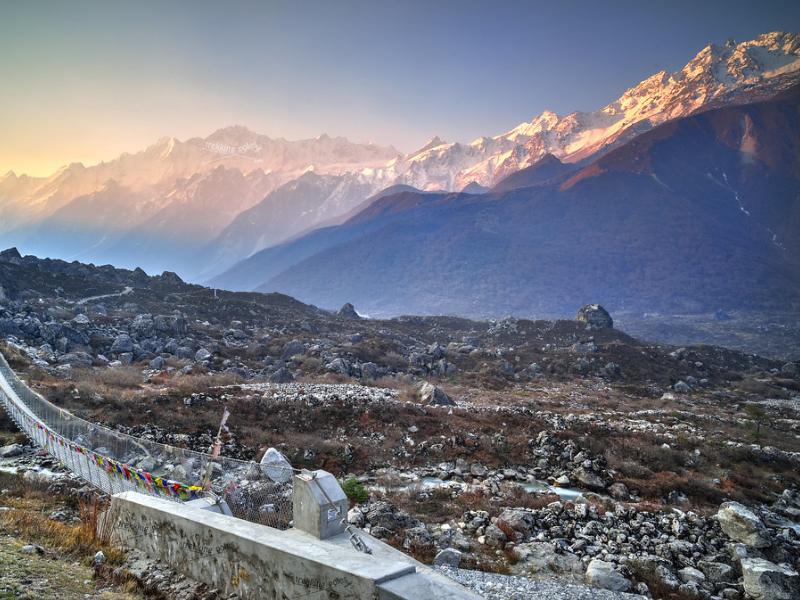
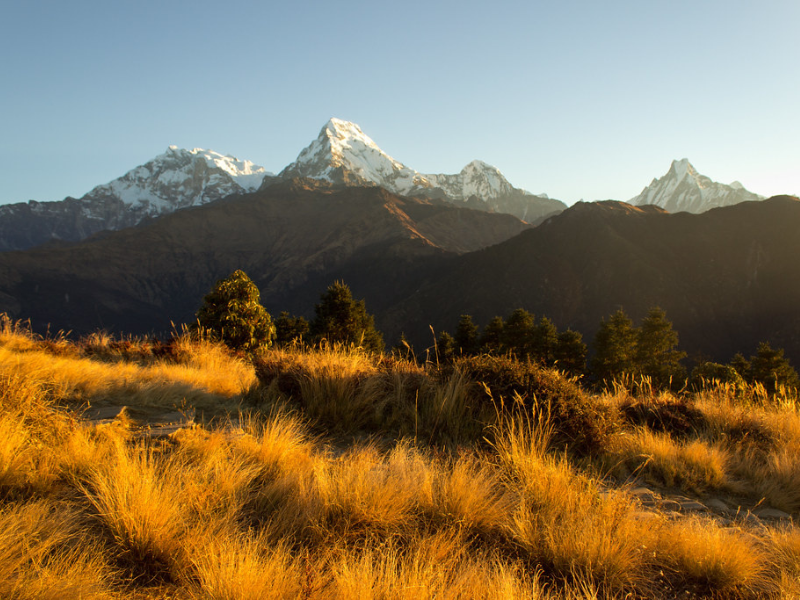
Everything You Need To Know About The Langtang Valley Trek in 2026
Hitting the trail in Langtang Valley has a way of sneaking up on you with its quiet beauty. You're not battling massive crowds or pushing to insane altitudes like on some of the bigger-name routes, but suddenly you're surrounded by these massive, snow-capped peaks, Langtang Lirung looming at 7,227 meters, Ganesh Himal off in the distance, and it all feels profoundly personal.
The path meanders through dense rhododendron forests alive with birdsong, past cascading waterfalls that mist your face, and into open meadows where yaks graze lazily under prayer flags strung between boulders. Villages dot the way, rebuilt with grit after the 2015 earthquake, where Tamang families offer warm smiles, fresh yak cheese from local factories, and stories shared over steaming cups of chiya in simple teahouses.
For a lot of folks, Langtang is that sweet-spot trek: challenging enough to feel like an accomplishment, but accessible for first-timers or those short on time. It's shorter than Everest Base Camp, closer to Kathmandu (no sketchy Lukla flight), and packed with cultural depth, Tamang and Tibetan influences everywhere, from the colorful gompas (monasteries) to the mani walls etched with prayers.
Wildlife adds an extra layer: keep an eye out for red pandas rustling in the bamboo, Himalayan tahrs bounding up rocky slopes, or even the occasional snow leopard track if you're really fortunate. The whole thing wraps you in a sense of peace that's hard to find on busier trails.
If you're scanning packages, Gorkha International Travel's 11-day Langtang Valley Trek is a practical, well-thought-out choice that keeps the hassle low. Priced from about $821 per person (dropping as low as $599 for groups of 20 or more), it includes two nights in a Kathmandu hotel with breakfast, private jeep transfers to and from the trailhead, teahouse stays along the route, all meals during the trekking days, an experienced English-speaking guide, a porter shared between two trekkers, the Langtang National Park entry permit, TIMS card, and basics like first-aid support. It's the kind of setup that lets you show up and just walk, without sweating the small stuff like transport bookings or permit runs.
Why Langtang Valley Stands Out as a Trek
What pulls people to Langtang isn't the hype, it's the authenticity. This valley, tucked in Langtang National Park just north of Kathmandu, feels like a hidden gem compared to the Everest or Annapurna circuits. You start in subtropical lowlands with langur monkeys swinging overhead and bamboo thickets whispering in the breeze, then climb steadily into alpine zones where the air turns crisp and the views open up to glacier-fed rivers carving through the landscape. The peaks aren't just backdrops; they're right there, Langtang Lirung's massive face dominates the skyline, with side valleys offering glimpses of Dorje Lakpa and other 6,000+ meter giants.
The cultural immersion is a big draw too. Tamang communities, with their Tibetan roots, line the trail: women in traditional chubas weaving baskets, kids playing in the dirt paths, elders turning prayer wheels at chortens. Stop in Mundu or Kyanjin Gompa, and you'll see life rebounding post-earthquake, new stone houses, thriving cheese production from yak milk (try the fresh stuff; it's creamy and nutty), and monasteries where monks chant in low, resonant tones that echo off the mountains. It's not performative; it's real daily life, and trekkers often end up chatting for hours over butter tea or joining in a casual game of carrom in a teahouse.
Compared to Everest Base Camp, Langtang is more forgiving: round-trip distance hovers around 60–70 kilometers, max elevation stays under 4,000 meters for the main trail (though optional side hikes push higher), and the whole thing wraps in under two weeks. No need for Diamox unless you're sensitive to altitude.
Costs are lower too, no expensive flights, and the quieter vibe means more space to reflect. Recent trekkers I've heard from describe it as "soul-restoring": one guy talked about sitting alone at a viewpoint, watching clouds race over the peaks, feeling like the only person in the world. If you want Himalayas without the full commitment, this is it.
Picking the Right Season: When Langtang Really Shines
The Himalayas don't mess around with weather, so nailing your timing makes or breaks the experience. For 2026, stick to the classic windows: spring (March to May) and autumn (September to November). These periods bring dry trails, reliable skies, and temps that make walking enjoyable rather than a slog.
Spring kicks off with warming days and exploding colors. Rhododendrons carpet the forests in vibrant pinks, reds, and whites, it's like trekking through a living painting, especially in April when blooms peak. Wildflowers join the show: primulas, orchids, irises dotting the meadows. Daytime temps range from 10–20°C in the lower sections, cooling to near-freezing at night higher up. Mornings might have mist, but it burns off for clear afternoons. Crowds build mildly in May, but nothing overwhelming. If you time it right, you catch the tail end of winter snow on the peaks for that extra dramatic contrast.
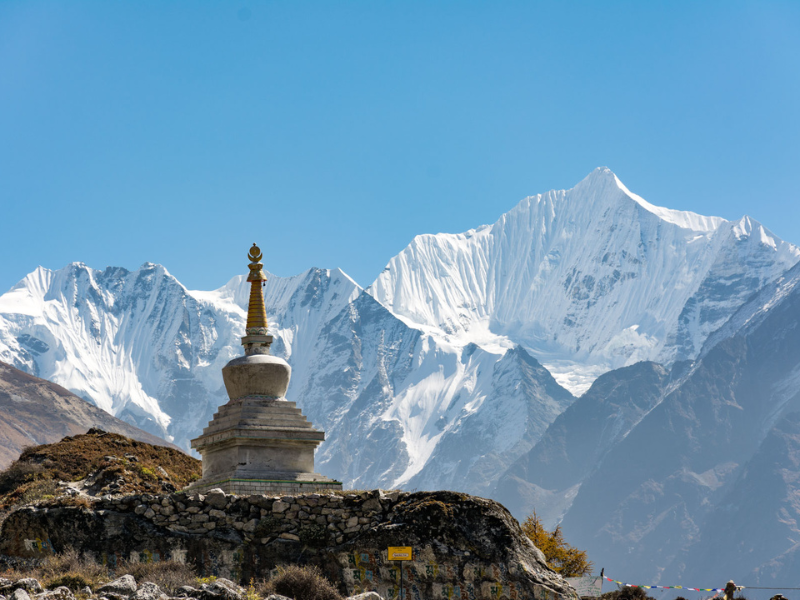
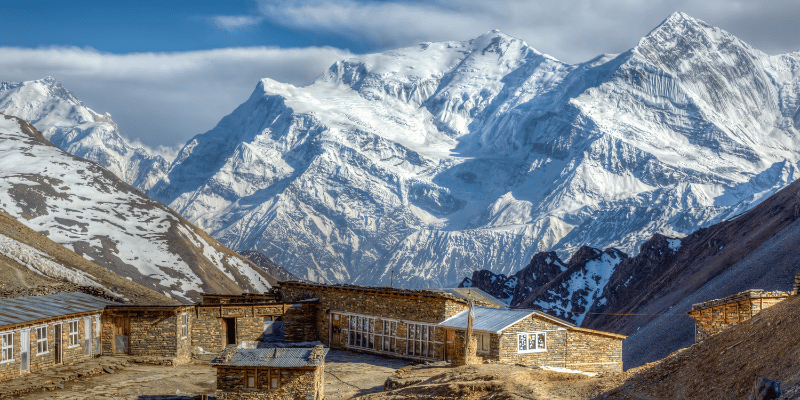
Langtang Valley and Kyanjin, Source: Wikimedia Commons
Autumn feels like the valley's reward after the rains. September shakes off the monsoon with fresh, washed landscapes, greener than ever. By October, skies turn a deep, piercing blue, winds stay calm, and visibility stretches forever, making those Langtang Lirung close-ups unforgettable.
Golden light hits the turning leaves, and temps hover comfortably: 5–15°C days, chilly nights. November brings crisper air and fewer people, but watch for early snow at higher spots. Both seasons see moderate foot traffic, enough for some camaraderie in teahouses, but not the conga lines of peak Everest months.
Skip the monsoon (June–August): relentless rain turns paths to mudslides, rivers swell dangerously, and clouds obscure everything. Landslides are common, and leeches? Yeah, they're a thing. Winter (December–February) appeals to hardy types, snow-blanketed valleys look magical, with frozen waterfalls and stark beauty, but temps plunge to -10°C or below at night, trails get icy and slippery, and many teahouses shutter. If you're experienced and geared for cold, it can be serene; otherwise, stick to the primes for 2026.
How Tough Is the Trek? Difficulty Level and Smart Prep
Langtang rates as moderate, tougher than a casual hill walk, but way more doable than multi-week epics like Annapurna Circuit. You're looking at 4–7 hours of walking most days, on trails that mix stone steps, dirt paths through forests, suspension bridges over roaring rivers, and open ridgelines with loose rocks. Elevation gain is steady but not brutal: starting at 1,460 meters in Syabru Besi, peaking at 3,800 meters in Kyanjin Gompa, with optional side trips to viewpoints like Kyanjin Ri (4,773 meters) or Tserko Ri (nearly 5,000 meters) for those wanting extra challenge and 360-degree panoramas.
The biggest hurdles? Uneven terrain that taxes your ankles and knees, especially descents, and the occasional steep section that gets your heart pumping. Altitude is present but milder, most people feel it as mild fatigue or headaches above 3,000 meters, but nothing like the Everest grind. No technical gear needed; just sturdy boots and poles.
To prep right, give yourself 2–3 months if you're not super active. Focus on real-world simulation:
- Hit local hikes or stairs with a 6–8 kg daypack to build stamina.
- Mix in cardio: brisk walks, jogging, cycling 4–5 times weekly to boost lung capacity.
- Strengthen legs and core, squats, lunges, planks, for stability on rocky bits.
- Practice downhill walking; that's where soreness sneaks in.
- Test your gear: break in boots to avoid blisters, layer clothes for variable weather.
Trekkers often say the mental side matters too, pacing yourself, staying positive through rain or fatigue. Guides help hugely, adjusting speed and pointing out shortcuts. If you're reasonably fit (able to hike 10–15 km with hills), you'll crush it.
Altitude Sickness: How to Handle It Without Drama
AMS isn't as big a deal here as on higher treks, but ignoring it is dumb. At Langtang's elevations, symptoms like throbbing headaches, nausea, dizziness, or insomnia can creep in above 2,500–3,000 meters, especially if you ascend too fast.
The itinerary smartly builds in an acclimatization day at Kyanjin Gompa, letting your body catch up. Practical tips that actually work:
- Go slow: no rushing the climbs; "slow and steady" lets red blood cells multiply.
- Hydrate like crazy, 4–5 liters daily, mixing water with electrolyte tabs if sweaty.
- Fuel up on carbs: teahouse dal bhat, rice, potatoes keep energy steady.
- Ditch alcohol, smoking, and heavy caffeine, they dehydrate and worsen symptoms.
- Diamox (acetazolamide) as a preventive if your doc okays it; start low dose.
- Monitor yourself: mild stuff? Rest and hydrate. Worsening (vomiting, confusion)? Descend immediately, guides know the drill.
Guides carry portable oxygen cans and know evacuation spots. Get insurance covering high-altitude rescue (up to 5,000 meters for side hikes). The trails are straightforward, with villages close enough for quick help if needed.
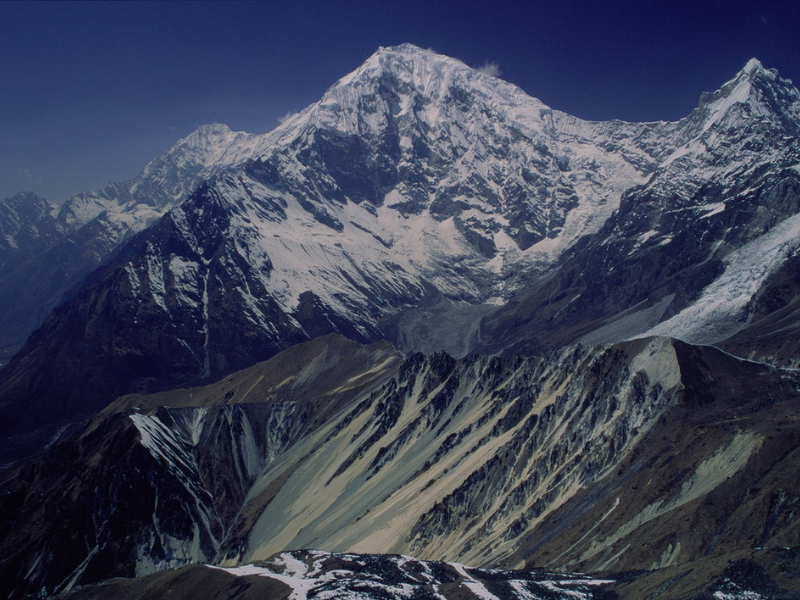
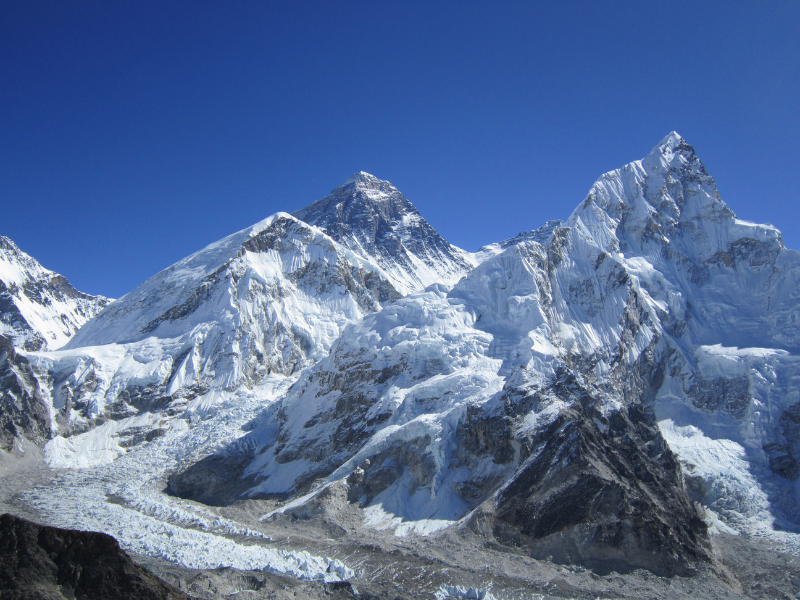
Langtang Lirung, Source: Wikimedia Commons
Breaking Down the 11-Day Itinerary
Gorkha International Travel's plan keeps it balanced, no rushed days, room for rest:
- Day 1: Land in Kathmandu (1,400m). Airport pickup, hotel check-in, time to shake off jet lag or wander Thamel's chaotic streets for last-minute gear.
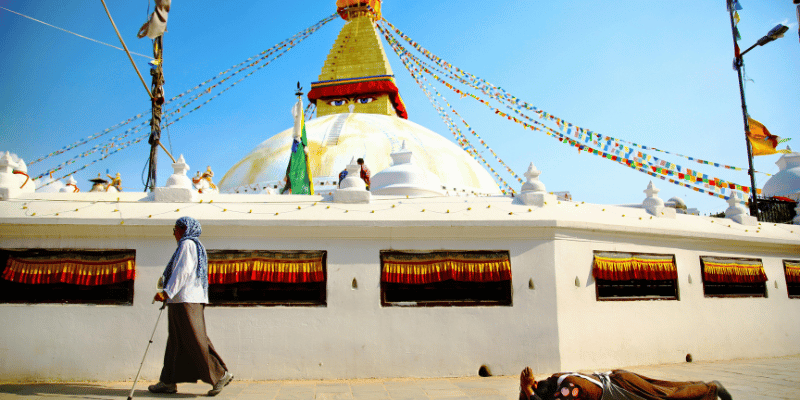
- Day 2: Free day in Kathmandu. Optional sightseeing: monkey-filled Swayambhunath stupa, massive Boudhanath with its spinning pilgrims, or Patan Durbar Square's ancient temples. Or just chill, stock snacks, meet your guide.
- Day 3: Jeep drive to Syabru Besi (1,460m, 6–7 hours). Windy roads through terraced hills, Trisuli River views, enter the national park, feels like the adventure starts.
- Day 4: Syabru Besi to Lama Hotel (2,450m, 6–7 hours). Cross bridges, trek through oak and rhododendron forests, spot monkeys or birds. Steady uphill, end at a cozy riverside spot.
- Day 5: Lama Hotel to Mundu (3,550m, 4–5 hours). Climb past bamboo groves and waterfalls; first peeks at Langtang Lirung. Mundu has a poignant memorial to earthquake victims, reflective stop.
- Day 6: Mundu to Kyanjin Gompa (3,800m, 4–5 hours). Open valley walking, yaks grazing, visit the cheese factory for fresh samples. Gompa's ancient vibes and peak views cap the day.
- Day 7: Acclimatization in Kyanjin. Rest or hike to Kyanjin Ri (4,773m) for insane panoramas, Everest even visible on clear days. Explore glacier views or just lounge with tea.
- Day 8: Kyanjin back to Lama Hotel (5–6 hours). Descent feels lighter; retrace steps, notice details missed going up.
- Day 9: Lama Hotel to Syabru Besi (3–4 hours). Easy downhill through forests; optional side path to a hot spring if time.
- Day 10: Jeep back to Kathmandu (6–7 hours). Afternoon free, hit a spa, shop for pashmina, or feast on momos.
- Day 11: Departure day. Airport drop-off, or extend if you want.
Built-in flexibility for weather or fatigue, roads can be bumpy, but views compensate.
Packing Smart: What You Really Need on the Trail
Keep your duffel under 10–15 kg for porters. Focus on versatile, quick-dry stuff.
Essentials:
- Broken-in trekking boots with grip; camp sandals for evenings.
- Layers: moisture-wicking base, fleece mid, insulated down jacket, waterproof Gore-Tex shell and pants for rain.
- Trekking poles, must for balance on bridges and descents.
- Sleeping bag rated -10°C or better (provided by Gorkha).
- Headlamp (power outs common), reusable water bottle with purification tabs/filter.
- High-SPF sunscreen, lip balm, hat, gloves, sun burns fierce at altitude.
- Snacks: energy bars, nuts, chocolate for quick boosts.
- Meds: ibuprofen for aches, Diamox if needed, blister plasters, antidiarrheal.
- Power bank, camera, charging costs $2–5 more.
Teahouses are basic: twin beds, shared squat toilets, bucket showers (hot water extra). Food's hearty, eggs, pancakes breakfast; soups, rice dinners.
Costs, Permits, and Why a Package Makes Sense
Permits total ~$50 (park entry + TIMS). Jeep transfers are included in packages.
Solo can run $500–800 with variables; Gorkha's $821 base locks in meals, guide, porter, accommodation, no surprises. Group discounts slash it for friends or families. Add $100–200 for personal stuff like showers, drinks, tips (budget $5–10/day for guide/porter).
Bottom Line: Is Langtang Worth Your Time?
Absolutely, if you're after a genuine slice of the Himalayas, stunning scenery, warm people, wildlife surprises, all without the intensity of longer treks. It leaves you refreshed, with stories and photos that linger.
If it sparks something, reach out to Gorkha International Travel, they handle custom dates, questions, whatever. Pack your boots, train those legs, and head to the valley.



Leave a Comment