
Everest Base Camp Trek 2026: Honest Guide – Costs, Difficulty, Best Time
Standing at Everest Base Camp at 5,364 meters is one of those experiences that stays with you forever. The Khumbu Icefall towers above, massive seracs glinting in the sun, prayer flags snapping in the thin, cold air, and the sheer scale of everything around you makes the world feel suddenly very small.
This isn't about summiting Everest, no ropes, no ice axes, no technical climbing skills required, but it is a proper test of your legs, lungs, and mental grit. For thousands of people each year, reaching Base Camp becomes one of the defining moments of their lives: a mix of exhaustion, awe, quiet pride, and the kind of views that make every blister and early-morning start worth it.
If you're researching packages right now, the 16-day Everest Base Camp Trek offered by Gorkha International Travel is built for exactly this kind of journey. Starting from around $1,390 per person (with meaningful discounts for larger groups), it includes everything practical: round-trip domestic flights between Kathmandu and Lukla, comfortable teahouse accommodation along the trail, three meals a day while trekking, all necessary permits, a professional English-speaking guide, a dedicated porter (one for every two trekkers), a duffel bag for your main gear, a sleeping bag, and even basic first-aid and oxygen support on the trail. The focus is on keeping things straightforward and safe so you can stay present for the walking, the conversations, and the mountains themselves.
What Draws People to This Trek
The Everest Base Camp route isn't some remote, untouched wilderness trail, it's one of the most walked paths in the Himalayas, and that liveliness is part of what makes it special. You move through real Sherpa communities where daily life still revolves around yaks, barley fields, potato crops, and the rhythm of the seasons, even as tourism has become the main income.
Namche Bazaar feels like a mountain town with personality: narrow lanes lined with shops selling everything from knock-off down jackets to fresh-baked cinnamon rolls, internet cafes buzzing with trekkers checking in, and a weekly market where locals trade vegetables and handicrafts.
Further up, Tengboche Monastery sits on a ridge with jaw-dropping views of Ama Dablam, often called the most beautiful peak in the world. The sound of monks chanting drifts across the valley, and the peace of the place contrasts sharply with the physical effort of getting there.
As you climb higher, the forests thin out, trees give way to scrub and rock, and the landscape turns stark and otherworldly, glacial moraines, frozen streams, the constant low rumble of avalanches rolling off distant faces. Every corner brings another giant into view: Lhotse's sheer wall, Nuptse's razor edge, Pumori's elegant shape, and finally Everest itself, which reveals itself gradually until you're standing right beneath it.
The human side stays with you just as long. Porters pass by with impossible loads, exchanging smiles and quick greetings. Guides share stories from their own childhoods in these villages or from past expeditions they've supported. Teahouse owners pour endless cups of ginger lemon tea and ask where you're from, genuinely interested. It's a trek that connects you to people and place in equal measure.
Picking the Right Time: Weather and Crowds
Timing is everything in the Himalayas, and the two best windows remain spring (March to May) and autumn (September to November). These periods offer the most stable weather, the clearest skies for mountain views, and the fewest disruptions from rain or snow.
Spring brings life back to the trails. Rhododendron forests burst into vivid pinks, reds, and whites, especially in April, turning entire hillsides into flower gardens. Days warm up enough for comfortable walking (often 5–15°C during the day at lower elevations), while nights stay cold enough to remind you how high you are. April also overlaps with the main Everest climbing season, so when you reach Base Camp, you often see colorful expedition tents, climbers moving gear, and the general hum of a major mountaineering operation in progress.
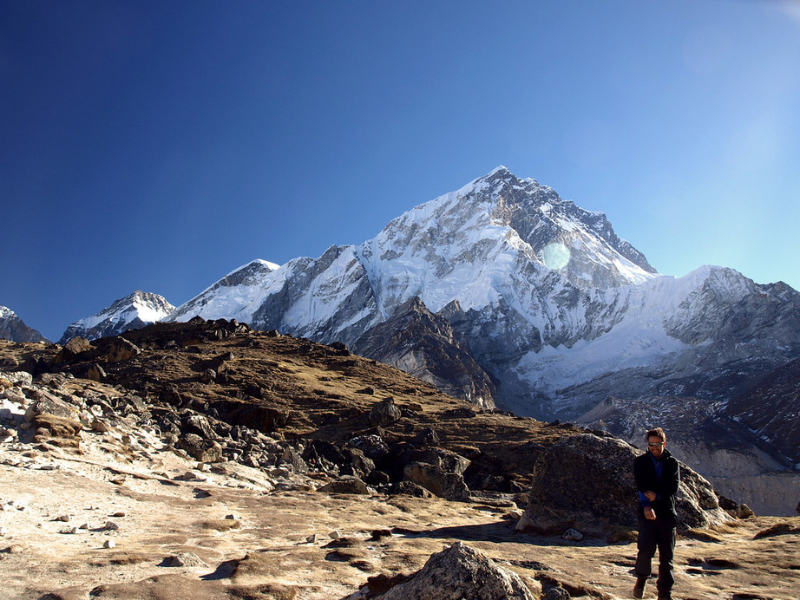
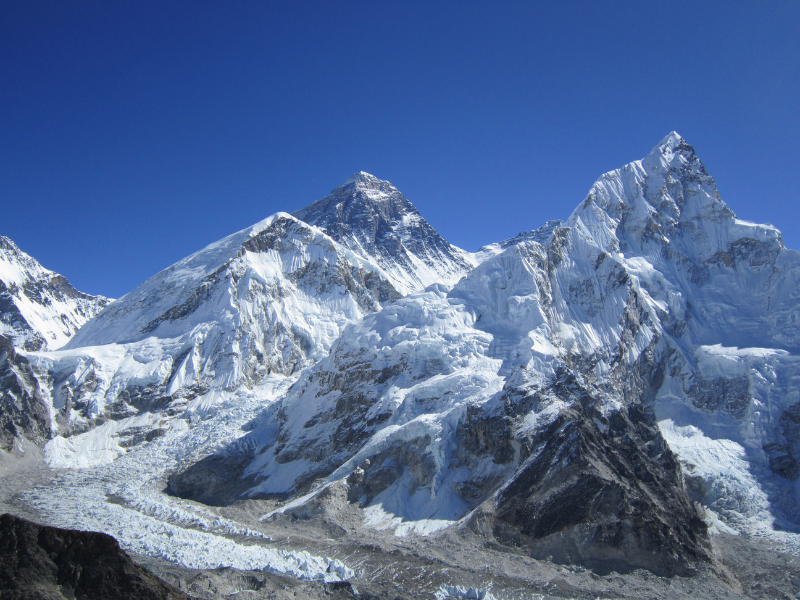
Mount Everest Base Camp, Source: Flickr
Autumn delivers some of the most reliable visibility of the year. The monsoon has washed the air clean, leaving deep blue skies and sharp, crisp outlines on every peak. October is frequently perfect, minimal wind, temperatures that feel invigorating rather than punishing, and those golden sunrises from Kala Patthar that make photographers forget how early they woke up. November remains excellent but starts to cool noticeably, with mornings dipping well below freezing even at lower camps.
The monsoon months (June to August) bring heavy rain, frequent landslides, swollen rivers, and almost constant cloud cover that hides the mountains, most operators and experienced trekkers avoid it entirely. Winter (December to February) is possible for those who thrive in extreme conditions, but trails can be icy, temperatures plummet to -20°C or lower at night, and many teahouses close. For anyone planning a 2026 trek, late March through May or late September through November continue to offer the safest, most rewarding conditions.
How Tough Is It, and How to Prep
This is a challenging trek by any measure: roughly 130 kilometers round-trip, with most days involving 5 to 8 hours of steady walking, significant elevation changes, and a final high point of 5,545 meters at Kala Patthar. The path includes long stretches of stone steps (some sections feel endless), loose scree and rocky moraine, swaying suspension bridges high above rivers, and plenty of uphill sections that test your breathing as the air thins.
You don't need any prior mountaineering experience, but you do need a solid base level of fitness and the willingness to keep moving even when your legs feel heavy. The biggest single factor isn't steepness, it's altitude and how your body responds to it.
To set yourself up for success, begin training at least 2–3 months in advance if you're not already active. Focus on building endurance rather than pure speed:
- Hike local hills or trails carrying an 8–10 kg daypack to mimic the real load.
- Incorporate stair climbing, hill repeats, or long brisk walks/runs 4–5 times a week.
- Add strength work for legs, glutes, and core, descents hammer your quads and knees, so strong muscles help prevent soreness and injury.
- Practice breathing techniques and get used to moving slowly and steadily.
Many people arrive having trained consistently and still feel the altitude hit hard, that's normal. The key is patience on the trail: walk at a pace that lets you talk comfortably (the famous "pole pole" advice from guides), rest when needed, and never try to race the itinerary.
Dealing with Altitude Sickness
Acute Mountain Sickness (AMS) is the single most common reason people have to turn back or need help. Symptoms usually appear above 3,000 meters: persistent headache, loss of appetite, nausea, dizziness, unusual fatigue, trouble sleeping. Mild cases often improve with rest at the same elevation; severe cases (confusion, severe vomiting, fluid in lungs) require immediate descent.
The itinerary is designed with safety in mind: two full acclimatization days (one in Namche at 3,440m, one in Dingboche at 4,410m) give your body time to adapt. Additional guidelines that make a real difference:
- Never increase your sleeping elevation by more than about 500 meters per day once above 3,000m.
- Drink at least 4–5 liters of water daily, dehydration worsens everything.
- Eat plenty of carbohydrates even if appetite drops (dal bhat, pasta, porridge are staples).
- Avoid alcohol, tobacco, and heavy caffeine above Namche.
- Consider preventive Diamox (acetazolamide) after consulting a doctor.
- Pay close attention to how you feel each morning and afternoon.
Guides are trained to spot warning signs, carry supplemental oxygen, and know the fastest evacuation routes. Comprehensive travel insurance that specifically covers high-altitude trekking and emergency helicopter rescue is non-negotiable, most policies require it for anything above 4,000 meters.
The 16-Day Itinerary Step by Step
Gorkha International Travel follows the classic, well-proven route with built-in buffers for weather and rest:
- Day 1: Arrive in Kathmandu (1,400m). Transfer to hotel, welcome briefing, time to settle in and explore Thamel if you're not too jet-lagged.
- Day 2: Early morning flight to Lukla (2,860m), the short, dramatic airstrip is an adventure in itself. Trek downhill through pine forest to Phakding (2,610m). Gentle introduction to the trail.
- Day 3: Phakding to Namche Bazaar (3,440m). Cross multiple suspension bridges, walk beside the Dudh Koshi River, finish with a steep climb into Namche. Hot meal and possible hot shower feel luxurious.
- Day 4: Full acclimatization day in Namche. Short side hike to the Everest View Hotel for your first clear look at Everest, visit the Sherpa museum, wander the market, rest.
- Day 5: Namche to Tengboche (3,860m). Gradual climb followed by a long descent and re-ascent. Monastery visit in the afternoon, quiet and powerful.
- Day 6: Tengboche to Dingboche (4,410m). Open valley walking with Ama Dablam dominating the skyline.
- Day 7: Acclimatization day in Dingboche. Optional short hike to a nearby viewpoint for better acclimatization and stunning scenery; otherwise rest, read, hydrate.
- Day 8: Dingboche to Lobuche (4,940m). Climb to Thukla Pass (4,830m) with its poignant memorials to climbers lost on Everest, emotional stop.
- Day 9: Lobuche to Everest Base Camp (5,364m) via Gorak Shep (5,164m). Long, rocky moraine walk to the base camp flags. Spend time soaking it in, take photos, return to Gorak Shep for the night.
- Day 10: Early start to Kala Patthar (5,545m) for sunrise over Everest and the entire Khumbu amphitheater. Descend to Pheriche (4,240m) for better rest and oxygen.
- Day 11: Pheriche back to Namche Bazaar. Downhill feels easier on the lungs.
- Day 12: Namche to Lukla. Final full trekking day, celebratory atmosphere in Lukla.
- Day 13: Morning flight back to Kathmandu. Afternoon free to relax or shop.
- Day 14: Buffer day for departure or extra time in Kathmandu.
The extra day helps absorb any Lukla flight delays, which happen when weather closes the airstrip.
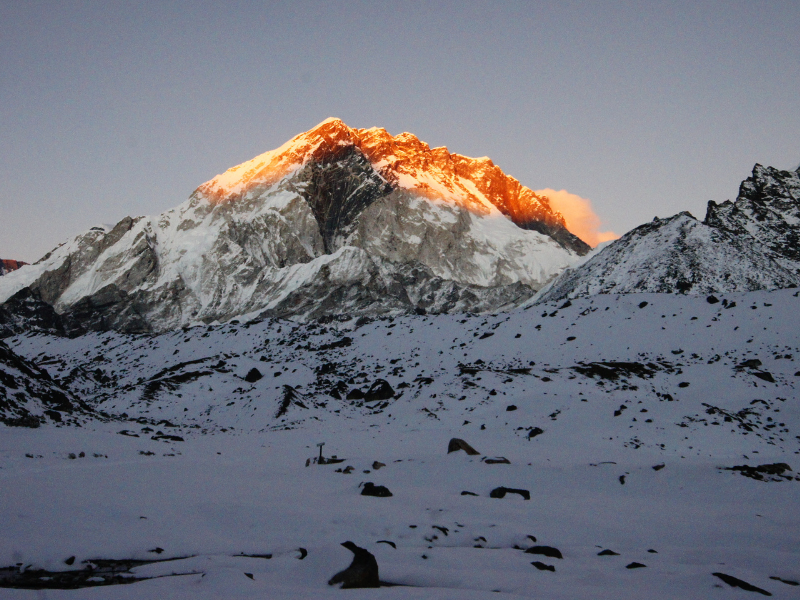
Everest Base Camp, Source: Wikimedia Commons
Packing Smart: Essentials Only
Porters carry up to 10–15 kg per person, so pack light but smart.
Must-have items:
- Well-broken-in trekking boots with good ankle support.
- Layering system: moisture-wicking base layers, insulating fleece or softshell, warm down jacket, fully waterproof/windproof Gore-Tex shell and pants.
- Trekking poles, seriously save your knees on descents.
- Sleeping bag rated to at least -10°C (provided by Gorkha International Travel).
- Headlamp with spare batteries, reusable water bottles or bladder, purification tablets or filter.
- High-SPF sunscreen, lip balm, sunglasses with side shields.
- Personal first-aid: ibuprofen, Diamox if using, blister plasters, rehydration salts.
- High-energy snacks (chocolate bars, nuts, energy gels) for morale.
- Power bank, socket charging costs extra at higher teahouses.
Teahouses provide twin-share rooms (usually basic but clean), shared bathrooms, and a warm dining area with a stove. Food is simple but hearty, dal bhat, noodle soups, pancakes, eggs.
Costs, Permits, and Why Go Guided
Individual permits run about $50–70 total (Sagarmatha National Park entry plus Khumbu rural municipality fee). Kathmandu–Lukla flights typically cost $350–400 round-trip, depending on season and demand.
Going independent adds up quickly with separate bookings, potential flight issues, and the need to arrange guides and porters on the spot. The Gorkha International Travel package at $1,390 base price covers nearly everything trail-related, including meals, accommodation, staff support, and equipment. Group discounts bring it down further for parties of 4 or more. Personal expenses (hot showers, Wi-Fi, extra drinks, tips) are your only add-ons.
Bottom Line: Worth Every Step?
For the majority who prepare properly, yes, this trek delivers far more than it takes. The physical challenge is real, but so are the rewards: that first unobstructed view of Everest, the warmth of a teahouse fire after a long day, the sunrise from Kala Patthar that makes everything feel possible, the friendships formed along the way. It's tough, it's beautiful, and it lingers long after you get home.
If the idea keeps pulling at you, reach out to Gorkha International Travel. They can help with dates, custom tweaks, or any questions about gear and preparation. The Khumbu is waiting, get ready, step onto the trail, and let it happen.


Leave a Comment