
Chitwan Jungle Safari Tour: 3 Days of Wildlife and Culture in Nepal's Heart
Chitwan National Park sits in Nepal’s southern Terai region, a flat stretch of subtropical jungle, tall grasslands, and winding rivers that feels worlds away from the Himalayan peaks most visitors chase. It’s one of the country’s oldest protected areas, a UNESCO World Heritage Site since the 1980s, and it’s famous for bringing back the greater one-horned rhinoceros from the brink.
Recent counts put Nepal’s rhino population around 750, with the vast majority, close to 700, right here in Chitwan. Tigers number over 120 in the park alone, part of a national total that has climbed steadily to around 355. Add in sloth bears, leopards, wild elephants, four kinds of deer, gangs of langur monkeys, and more than 500 bird species, and you have a place where wildlife still moves freely and sightings happen close enough to feel real.
The 3-day Chitwan Jungle Safari Tour from Gorkha International Travel keeps things straightforward and comfortable. At US$360 per person for solo or small groups (dropping to as low as $299 for bigger parties of 24 or more), it covers transportation, lodging, meals, park fees, and guided activities without piling on extras. It’s built as a natural break after Kathmandu’s bustle or Pokhara’s lakes, five to six hours by road from the capital, or a quick 20-minute flight to Bharatpur followed by a short transfer to Sauraha, the main gateway town.
How the Days Unfold
Day 1 – Getting There and Settling In Most trips kick off early from Kathmandu. The tourist bus leaves around 6 or 7 a.m., air-conditioned with decent seats, winding down through green hills, past rivers and villages, into the wide-open Terai plains. Stops for tea and roadside snacks make the five- to six-hour ride pass quickly; the landscape changes from terraced fields to flat rice paddies and mustard blooms. From Pokhara it’s shorter, about four to five hours. Anyone short on time can fly to Bharatpur, quick and smooth, then hop a jeep or tuk-tuk to the lodge.
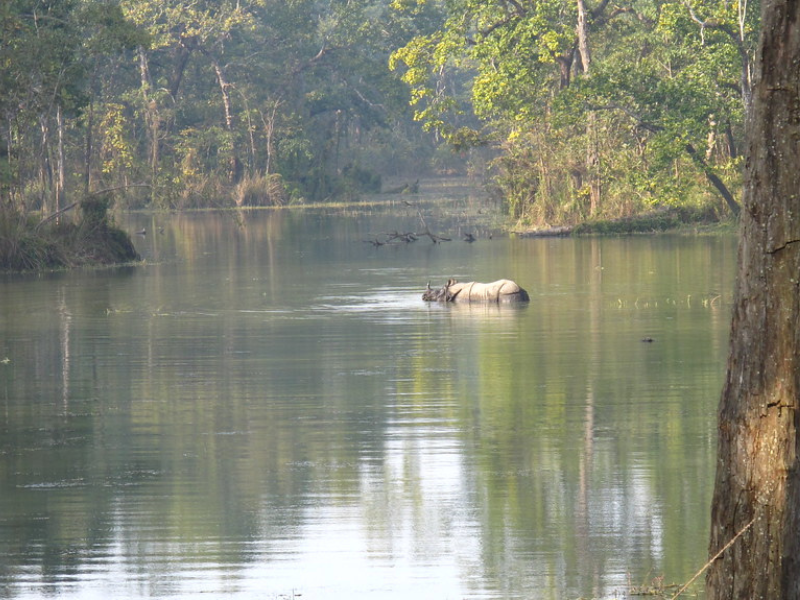
Rhino Crossing a River in Chitwan NP (Source: Flickr)
You reach Sauraha by early to mid-afternoon. The driver waits with a sign, hands over a cold welcome drink (usually fresh lime water or juice), and gets you to the resort. Rooms are straightforward three-star comfort: fan or AC, hot shower, clean linens, often a balcony looking out at trees or the Rapti River. After check-in comes a short briefing, safety rules (stay close to guides, no wandering off, wear muted colors), what gear to bring, and the schedule ahead.
Lunch is hearty Nepali style: steaming dal bhat with seasonal vegetables, chicken or river fish curry, rice, achar pickles, and salad. Continental choices like pasta show up too if needed.
Afternoon heads into a nearby Tharu village. These communities have lived alongside the jungle for generations, building raised houses from mud, bamboo, and thatch to stay above floodwaters. Walk or short drive through, watch women weaving baskets, see farming life up close, talk to locals who explain customs and how they coexist with rhinos and tigers without constant trouble.
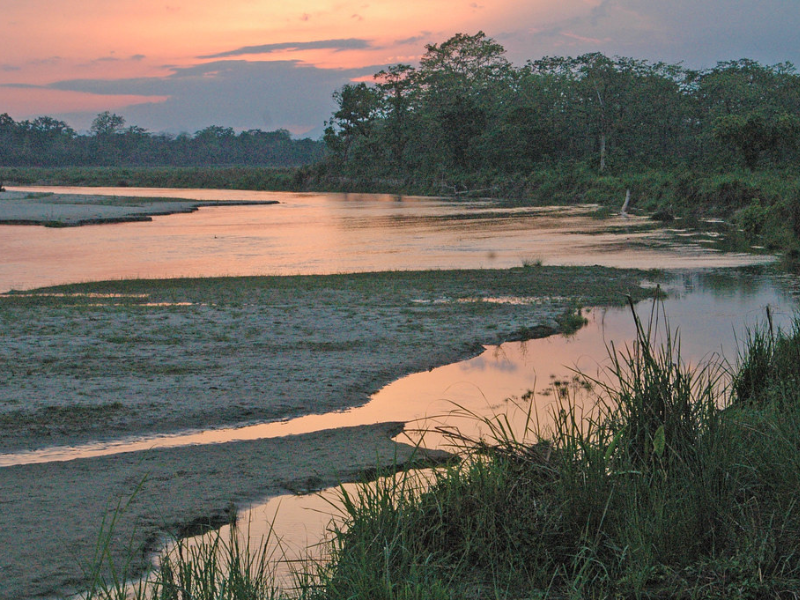
As light fades, move to the Rapti River bank for sunset. Sit on the grass, watch the sky turn gold, scan for birds wheeling overhead or crocodiles on distant sandbars.
Evening wraps with the Tharu cultural show, drums pounding, folk songs, the famous Lathi Naach stick dance where performers clash bamboo in sharp rhythms, twirl fire, mimic peacocks, throw in light humor. It celebrates harvests and protection from wild animals. Dinner follows: buffet with local specialties like ghongi (river snail) curry, fresh greens, and maybe sel roti sweets. Early night, tomorrow starts before dawn.
Day 2 – Full Day in the Jungle Wake-up call around 5:30 a.m., tea or coffee brought to the room. Breakfast is quick but filling: eggs any style, toast, papaya and bananas, potato curry with roti or puri, cereal, juice.
Out by 7 a.m. for bird watching along river edges or buffer zones, kingfishers darting blue, bee-eaters flashing colors, hornbills calling from trees, peacocks strutting, egrets and herons everywhere. Binoculars help; many lodges lend pairs.
Next comes canoeing on the Rapti. Traditional dugout, low in the water, gliding past mugger crocodiles basking, gharials with their long thin snouts, monitor lizards, otters slipping in and out. Water birds like cormorants and darters perch close. It’s quiet, serene, eye-level with the river life.
A stop at the elephant breeding center follows, calves splashing and playing, adults being fed greens or bathed in the shallows. It’s part of ongoing conservation work, breeding to support wild populations and anti-poaching efforts.
Back for lunch: more dal bhat, grilled meats, salads, yogurt to cool off.
The afternoon jeep safari runs four to five hours into the core park. Open 4x4s bounce along dusty tracks through elephant grass, sal forest, riverine patches. Guides read signs, fresh pugmarks, deer alarm calls, wallows in mud. Rhinos appear often, grazing or crossing paths, sometimes with calves. Herds of spotted deer or sambar bound away, wild boar root around, langurs chatter in the canopy. Tigers stay elusive (tracks or roars count as wins), but sloth bears or leopards show up now and then. Dust kicks up; a bandana or scarf helps.
Return late afternoon, time to shower and relax. Dinner brings more Nepali-Tharu flavors. If the cultural program was missed the first night, it repeats.
Day 3 – Morning Wrap-Up and Heading Out: Another early rise. Breakfast: eggs, fruit, roti with veggies, perhaps sel roti or aloo sabji.
Final activities depend on timing, more birding in the buffer zone, another canoe if wanted, or revisit the elephant center to watch calves trunk-wrestle or adults eat. Peacocks fan tails in the soft light, hornbills fly overhead.
By 9 or 10 a.m., check out. Bus back to Kathmandu (five-six hours) or Pokhara (four-five), or catch the Bharatpur flight for a quick return to the city by lunch or early afternoon.
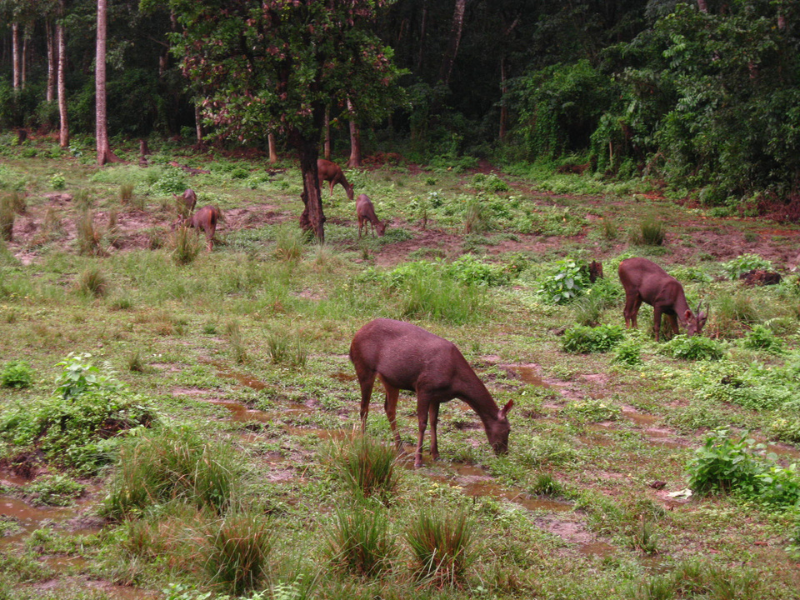
Barking Deers at Chitwan NP (Source: Wikimedia Commons)
What Makes This Tour Work Well
It balances adventure and ease. Jeep safaris cover ground safely and comfortably; canoe rides offer calm water views, the elephant center visit ties into real conservation without pushing rides (most operators now favor jeeps for better animal welfare). Tharu culture adds depth, music, dance, and village life show how people have shared space with wildlife for centuries.
Recent visitors note reliable organization, knowledgeable guides who spot subtle tracks and calls, solid rhino sightings (almost a given), occasional tiger thrills through prints or distant roars, and evenings that feel lively but not forced. The pace suits families, couples, or anyone wanting wildlife without multi-day treks. Early mornings catch active animals and cooler air; afternoons let you recharge.
Practical side: pack light layers (long pants and sleeves for bugs and sun), sturdy shoes, hat, sunscreen, repellent, binoculars if you have them, reusable water bottle. Cash for tips (guides and drivers appreciate small amounts). Insurance covers the basics, twists, delays, health. Wi-Fi is patchy; the break from screens feels welcome.
Chitwan complements any Nepal trip. After temples and mountains, the flat warmth, river sunsets, and close animal encounters provide contrast. Gorkha International Travel keeps transfers smooth, guides consistent, and details handled, so the focus stays on the jungle itself.
The park tells a quiet success story, rhinos rebounding, tigers increasing, and communities involved in protection. A short visit here leaves impressions that stick: the bulk of a rhino in morning mist, drums echoing after dark, the sense of a living wild place still thriving.
For anyone piecing together a Nepal route, this three-day package fits neatly and delivers memories worth the dust on your boots.


Leave a Comment