
5 Must-Do Activities While In Kathmandu In 2026
First time in Kathmandu? Here's How To Enjoy As A foreigner
You fly into Tribhuvan International, step out into that thick mix of exhaust, incense, and mountain air, and suddenly you're in the middle of it all. Kathmandu doesn't ease you in, it's loud, dusty, crowded, and full of surprises around every corner. Temples next to honking scooters, sadhus asking for selfies, street dogs napping in the sun. A lot of people use it just as a stopover before heading to Pokhara or trekking, but if you give it a few days, it grows on you fast. The valley's got this ancient, layered feel, Hindu and Buddhist stuff intertwined for centuries, Newari architecture everywhere, and a vibe that's equal parts chaotic and welcoming.
As someone who's seen plenty of first-timers get overwhelmed then hooked, these are the five activities that keep coming up in conversations. They're the ones that give you the real Kathmandu experience without feeling too tourist-trappy (though Thamel sneaks in at the end). Do them in any order, but try to space them out, traffic and crowds make rushing a bad idea.
1. Walking the kora at Boudhanath Stupa
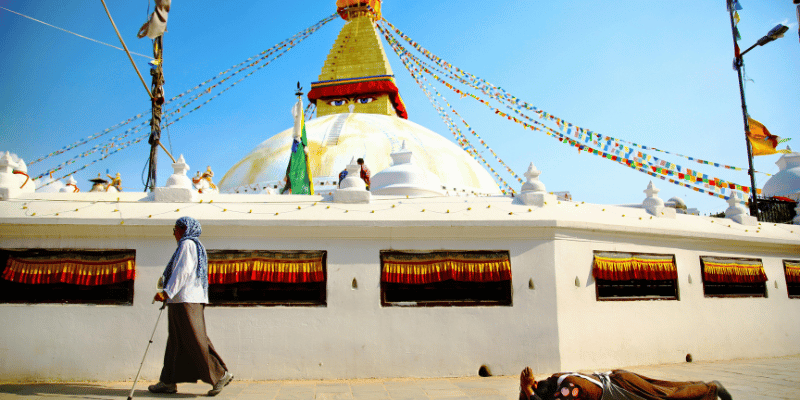
This is still number one for a reason. You land in Kathmandu, you're jet-lagged, the air feels thick, and then you step into Boudha and everything slows down. The stupa is huge, white dome, gold top, those giant eyes staring at you from every angle. It's the biggest in Nepal and basically the center of Tibetan Buddhist life here since so many refugees came over decades ago.
The best thing is just doing the kora: walk clockwise around the base, spin the prayer wheels (they're everywhere, some huge bronze ones that take two hands), watch monks chanting, old ladies counting beads, kids running laps like it's a playground. People light butter lamps, prostrate on the stones, it's not touristy performance; it's everyday devotion.
I always tell people to go at sunrise or just before sunset. Morning light makes the white dome glow, fewer touts, and you can sit on a bench with a cup of salty butter tea from one of the little stalls. Afternoon/evening the rooftop cafes fill up, grab momos or thukpa and watch the whole scene from above. Entry is still 400 NPR for foreigners (kids under 10 free). If you're into it, buy a small butter lamp (20-50 NPR) and light it, feels nice.

Boudhanath Stupa (Source: Wikimedia Commons)
Pro tip: the surrounding lanes have killer Tibetan food, try places like Roadhouse Cafe or one of the tiny family-run spots for khapse or skyu. Avoid the overpriced "view" restaurants right on the square if you're on a budget. And watch your stuff; pickpockets know tourists zone out here.
This place calms you down when the city chaos starts getting to you. A lot of people say it's the spot where Kathmandu stopped feeling overwhelming and started feeling magical.
2. Hiking up to Swayambhunath (Monkey Temple)
If Boudha is peaceful, Swayambhunath is wilder and more in-your-face. It's up on a hill, so you climb 365 steps (yeah, one for each day, cute symbolism). Monkeys everywhere, seriously, hundreds of them. They'll snatch anything not tied down: water bottles, sunglasses, even whole bags if you're careless. Bring bananas if you want photos; otherwise keep food hidden.
At the top the views are insane, whole valley spread out, Himalayas peeking on clear days (October-November or Feb-March are best for that). The stupa is older-feeling than Boudha's, with prayer flags whipping around, little shrines tucked in corners, a tiny museum if you're into artifacts.
It's shared by Hindus and Buddhists, so you'll see both doing their thing. Get there early (sunrise is gold, cooler, fewer people, light hitting the prayer flags perfectly). Entry's 200 NPR now for foreigners. Wear decent shoes; steps are uneven and can be slippery if it's been raining.
After, wander down the back way through little villages instead of the main path, quieter, more local vibe, and you avoid the souvenir gauntlet at the bottom. Grab chai or lassi from a roadside stall on the way down.
It's a solid workout with big spiritual payoff and those cheeky monkeys make it fun (and a little stressful). Most foreigners remember the monkeys more than anything else.
3. Wandering Kathmandu Durbar Square
This is old Kathmandu proper, pagoda-roof temples, carved wooden windows, stone statues, the whole medieval vibe. It got hammered in 2015 earthquake, but a ton has been rebuilt or stabilized, so it still feels alive and ancient at the same time.
Key spots: Taleju Temple (massive, with those erotic carvings on the struts, Newari style is pretty bold), Hanuman Dhoka palace area, and Kumari Ghar where the living goddess sometimes appears at the window (don't count on it; she's picky about when she shows). Priests do daily pujas, locals hang out, kids chase pigeons, it's not frozen museum stuff.
Walk the back alleys too, Asan, Indra Chowk, narrow lanes with spice shops, fabric stalls, metalworkers banging away. You can get lost for hours and stumble on tiny temples or hidden courtyards.
Foreigners pay 1000-1500 NPR now (prices creep up; some say 1500 including the museum part). Get the multi-site pass if you're doing several UNESCO places, it saves hassle.

Basantapur (Source: Wikimedia Commons)
Go late afternoon for golden light on the roofs, fewer crowds than morning. Pair it with Newari food nearby, try bara, chatamari or yomari at a local bhatti. Avoid eating right on the square; it's overpriced.
It's history you can touch and smell, incense, street food, dust. Feels like stepping back centuries while life keeps going around you.
4. Experiencing Pashupatinath Temple
This one's intense. Holiest Shiva temple in Nepal, right on the Bagmati River. Hindus only inside the main golden-roof temple, but foreigners walk the whole complex, ghats, smaller shrines, sadhus chilling under trees with dreads and ash.
The open cremations are the thing most people talk about (or avoid). Pyres burn 24/7, families mourn, smoke drifts. It's public, raw, emotional, not like anything in the West. Some find it heavy or uncomfortable; others say it's one of the most real spiritual experiences they've had.
Dress modest (long pants/skirts, covered shoulders), no photos of cremations unless someone invites you (and even then, be respectful). Entry 1000 NPR. Mornings are busiest with rituals.
Cross to the other side of the river for views without being right in it if it's too much. Sadhus will ask for money for photos, small amounts or politely decline.
It's confronting but eye-opening, life, death, devotion all mixed together. Many foreigners leave quieter than they arrived.
5. Diving into Thamel
Thamel is the tourist ghetto, narrow streets, neon signs, bars blasting music, shops selling everything from fake pashmina to trekking boots. It's loud, pushy, fun, and exhausting.
Shop smart, bargain hard (start at half the asking price), compare shops. Get custom clothes made if you have a few days. Food-wise, Fire and Ice for pizza if you're homesick, or hole-in-the-wall places for momos and chow mein. Rooftop bars for sunset drinks, cheap Gorkha beer or cocktails with valley views.
Nightlife picks up after dark, live bands, clubs, traveler stories. But walk a few blocks out and it gets local quick, quieter cafes, family-run spots.

Thamel Nightlife (Source: Wikimedia Commons)
Use it as base but don't stay stuck there. Book treks, yoga classes, or cooking lessons. Pathao or taxis for getting around (traffic's worse every year).
It's the easy intro to Kathmandu's energy, great for meeting people, but the real city is outside it.
These five give you the spiritual hits, the history, the chaos, and the fun. Spend 4-5 days minimum. Traffic sucks, use Pathao app for bikes/cars. Carry small notes, respect sites (shoes off, no leather inside some), drink bottled water. And just walk, best way to see things.
Kathmandu's messy, polluted, beautiful, and alive. It grows on you. Hit me if you want more specifics on any of these or hidden spots around town.
Practical Tips To Enhance Your Experience
- Stick to bottled or filtered water, always. Tap water isn't safe, even for brushing teeth if your stomach's sensitive. Grab bottled from shops (look for sealed caps; some places refill fakes). Or get a LifeStraw/Grayl bottle if you're staying longer, saves plastic and works for trekking too. Traveler's diarrhea hits hard here; don't risk it on day one.
- Use Pathao for rides, not random taxis. Traffic is insane, narrow streets, no rules, constant honking. Download Pathao (it's like Uber here, bikes or cars). Way cheaper than hotel taxis or street cabs that quote triple. Pay cash or link a card; works even in rain. For longer hops (airport to Thamel), it's 300-500 NPR vs 1000+ from a tout.
- Carry small notes and cash everywhere. 100s and 500s are gold; big notes (1000+) get refused at small shops or street food. ATMs spit out big ones sometimes, so break them at your hotel or a supermarket. Cards work in nicer places, but cash rules, especially bargaining or entry fees.
- Dress modestly at temples and stupas. Shoulders and knees covered, no shorts, tank tops, or see-through stuff. Shoes off inside most sites (carry socks if floors are gross). At Pashupatinath, no leather belts/shoes near the main areas. Locals notice and appreciate the respect; plus, you avoid getting turned away.
- Bargain hard in Thamel and markets. First price is usually 2-3x what they'll take. Start at half, walk away if needed, they'll call you back. For pashmina, trekking gear, or souvenirs, compare a few shops. Fake North Face is everywhere, check zippers/stitching. Don't feel bad; it's expected.
- Go early to beat crowds and heat/pollution. Sites like Swayambhunath or Boudha are magic at sunrise, cooler, fewer people, better light. Pollution spikes mid-morning to afternoon (dust + exhaust); mornings clearer. Wear a mask if your lungs hate it (cheap ones at pharmacies). Late afternoon works too for golden hour without the full-day smog.
- Respect the cremations at Pashupatinath. It's open and intense, don't photograph pyres or mourners unless invited (and even then, think twice). Stay quiet, keep distance. If it's too heavy, view from the opposite bank. Sadhus might ask for photo money, 5-20 NPR or a polite no.
- Eat street food smart, stick to busy spots. Momos, chatpate, sel roti, delicious and cheap, but choose places with turnover (long lines = fresh). Avoid raw salads/uncut fruit unless peeled yourself. Dal bhat at local bhattis is safest and filling. If your stomach flips, pharmacies have good meds (like Norflox).
- Watch your stuff in crowds. Pickpockets target tourists in Thamel, Durbar Square, buses. Use a cross-body bag, keep phone/wallet in front pockets. Don't flash cash or fancy gear. At night in Thamel it's lively but walk with friends if solo, standard big-city smarts.
- Give yourself buffer time, everything takes longer. Traffic, roadworks, sudden rain, plan extra for airport runs (aim 3+ hours early for international). Sites close early sometimes; check Google Maps or ask your hotel. Don't cram too much in one day, Kathmandu exhausts you fast. Slow down, grab chai on a rooftop, watch the chaos.



Leave a Comment